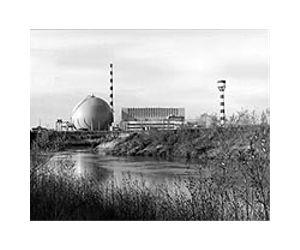
With Japan's nuclear crisis dominating headlines in Italy, officials here are battling opposition to the planned re-introduction of atomic power abandoned following the Chernobyl disaster.
Prime Minister Silvio Berlusconi has made nuclear energy a key part of his platform despite widespread public opposition even before Friday's massive earthquake and tsunami in Japan.
He argues it will cut bills and boost Italy's independence.
"We cannot allow a new fear, not at this stage. Turning back is unimaginable," Economic Development Minister Paolo Romani told reporters.
Rome wants to start building nuclear power stations from 2014 and to produce a quarter of its electricity with atomic energy by 2030.
But the government faces a crucial referendum on the issue on June 12.
In a 1987 referendum — a year after the Chernobyl meltdown in the Soviet Union — most Italians voted against nuclear power.
And even before the catastrophe in Japan, a poll by the Ipsos institute in February showed 58 percent of Italians opposed nuclear power stations.
Some 32 percent were favourable and 10 percent did not have an opinion.
Italy's three biggest environmental groups — Greenpeace, Legambiente and WWF — have accused Italy's nuclear security agency of trying to play down the effects of the unfolding tragedy in Japan for "political propaganda".
Environment Minister Stefania Prestigiacomo responded the government was "neither blind nor deaf" but insisted on the need for "energy independence."
The Italian government so far is still holding firm to its target of switching on new nuclear power stations by 2020.
France's EDF and Italy's Enel plan to build four reactors in Italy.
Enel chief executive Fulvio Conti on Tuesday told reporters that the energy giant would press ahead with its plans despite the Japanese crisis. He appealed to the public "not to react in an emotional way."
The next step for the government will be to choose sites for nuclear power stations, which is more than likely to increase the controversy.
Three regions in southern Italy that had adopted laws banning nuclear power stations from being built on their territories had their legislation struck down by Italy's Constitutional Court last year after a government complaint.
Pier Luigi Bersani, leader of the opposition centre-left Democratic Party, has warned that the return of nuclear power is a "mistake".
"We have good reason to say no to the government's plans on nuclear energy that is completely mistaken," Bersani said.
"Faced with the drama in Japan, we are asking the government to stop and think," he said, calling for "a moment of reflection."
Carlo Stagnaro, research director at the Bruno Leoni Institute, a free-market think tank in Turin, said: "If the situation deteriorates in Japan, there will be a pause for reflection on nuclear power" in Italy.
Share This Article With Planet Earth