
CIVIL NUCLEAR
'Operating normally': Russia shows seized Ukraine nuclear plant
By Gokan GUNES
Energodar, Ukraine (AFP) May 2, 2022

Nearly two months after it was seized by Russian forces, there are few signs of the fighting for the Zaporizhzhia nuclear power plant in Ukraine that sparked global fears of a potential atomic disaster.

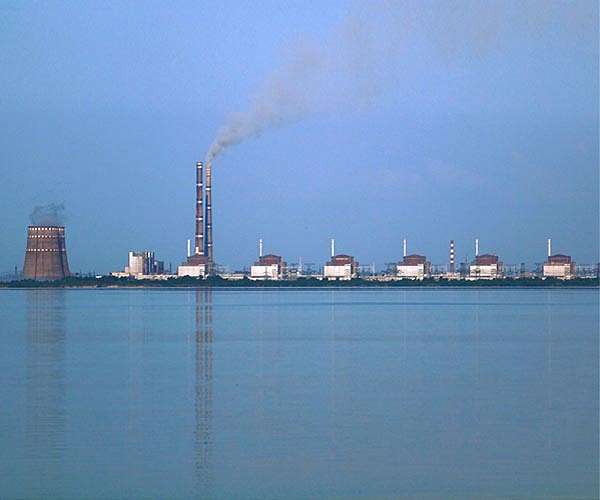
Other than a scorched administrative building, the vast complex in southern Ukraine -- Europe's largest nuclear power plant -- appeared largely untouched by the clashes during a visit by AFP this weekend, part of a press tour organised by the Russian military.

There has been deep international concern over the situation at the plant, which has six of Ukraine's 15 reactors and can create enough energy for four million homes.

Russian forces seized the site amid fighting in early March that caused a large fire at a training facility at the plant, which sits along the Dnipro river south of the Ukrainian-held city of Zaporizhzhia.

There was no spike in radiation, but the clashes nonetheless caused deep worries, especially in the country that was the site of the world's worst nuclear accident at Chernobyl in 1986.

Rafael Grossi, the head of the UN's nuclear watchdog, the International Atomic Energy Agency, said last week that it was "extremely important" for IAEA monitors to be able to access the site, which was built in the early 1980s but modernised in recent years.

Russia insists it is taking all necessary precautions at the plant, where its troops now patrol in the shadows of its enormous and heavily reinforced red-domed reactors.

- 'Everything is good!' -

"The Zaporizhzhia NPP is operating normally, in compliance with all nuclear, radiation and environmental safety standards," Valery Vasilyev, a major general with Russia's Nuclear, Biological and Chemical Protection Troops, told journalists at the site.

The facade of the training centre that caught fire remains blackened and its windows were blown out, but no other signs of damage at the plant were visible.

Soldiers on patrol or positioned behind sandbags showed no sign of concern and wore no protective equipment against radiation.

"Everything here is good!" Andrey Shevchik, the new pro-Russian mayor of Energodar, the city of around 50,000 people built in the 1970s to serve local power plants, told journalists at the site.

"Residents and workers of the nuclear power plant are completely safe," he said.

"All comfortable conditions are being created for them to work, to generate energy, and to keep the nuclear power plant safe."

Shevchik said the plant was "ready to sell electricity to Europe", before driving off in a gleaming SUV painted with Russian flags.

He also said residents who had fled were returning to the city, though there was no way to verify the claim.

It is unclear how exactly the plant is now operating, though Ukrainian workers continue to work on site under Russian supervision.

AFP was unable to meet any of the Ukrainian staff at the plant or to speak to residents in Energodar.


Related Links
Nuclear Power News - Nuclear Science, Nuclear Technology
Powering The World in the 21st Century at Energy-Daily.com

CIVIL NUCLEAR
Purdue and Duke Energy to explore potential for clean, nuclear power source for campus
West Lafayette IN (SPX) Apr 29, 2022
Purdue University and Duke Energy announced today (April 27) that they plan to jointly explore the feasibility of using advanced nuclear energy to meet the campus community's long-term energy needs. With interest rising worldwide in new technologies that are reliable and carbon-free, Purdue and Duke Energy intend to study power produced through Small Modular Reactors (SMRs), a move that may be unprecedented for a college campus and a potential fit for Purdue's energy needs. According to the ... read more

Comment using your Disqus, Facebook, Google or Twitter login.

Share this article via these popular social media networks
del.icio.usdel.icio.us DiggDigg RedditReddit GoogleGoogle

CIVIL NUCLEAR
Mystery solved about active phase in catalytic CO2 reduction to methanol

Using human energy to heat buildings will pay off

Dung power: India taps new energy cash cow

Biden's biofuel: Cheaper at the pump, but high environmental cost?

CIVIL NUCLEAR
ABC Solar Expands to Louisiana Just-In-Time

How solving Central Asia's water-energy conflict could boost renewable energy

How a soil microbe could rev up artificial photosynthesis

From seawater to drinking water, with the push of a button

CIVIL NUCLEAR
Transport drones for offshore wind farms

Lack of marshaling ports hindering offshore wind industry

Favourable breezes boost Spain's wind power sector

Brazil to hold first offshore wind tender by October: official

CIVIL NUCLEAR
Canada stumbling in transition to low-carbon economy

EU needs to recycle more to hit green energy goals: report

Paris climate targets feasible if nations keep vows

Lots of low- and no-cost ways to halt global warming

CIVIL NUCLEAR
Dual membrane offers hope for long-term energy storage

Using excess heat to improve electrolyzers and fuel cells

Machine learning, harnessed to extreme computing, aids fusion energy development

Electric, low-emissions alternatives to carbon-intensive industrial processes

CIVIL NUCLEAR
Mexico shuts US-owned quarry on environmental grounds

Costa Rica president-elect says will not ratify environment treaty

Bacteria can stick to plastic in the deep sea to travel around the ocean

Choking and sweating around Delhi's burning hill of trash

CIVIL NUCLEAR
OPEC+ eye modest supply boost as demand dented by China Covid rules

Shell profit up as high oil prices offset Russia hit

OPEC+ eye modest supply boost as demand dented by China Covid rules

Germany warns energy security trumps porpoise habitat

CIVIL NUCLEAR
Emirates Mars mission discovers new mysterious aurora

China's Zhurong travels over 1.9 km on Mars

Farewell to the Torridon Quad - Sols 3459-3461

Enigmatic Rock Layer in Mars' Gale Crater Awaits Measurements by the Curiosity Rover