
 |
 |
 |
 |
 |
 |
 |
 |
 |

 |

Leeds, UK (SPX) Oct 27, 2010 Research by University of Leeds plant scientists has uncovered a snapshot of evolution in progress, by tracing how a gene mutation over 100 million years ago led flowers to make male and female parts in different ways. The findings - published in the Proceedings of the National Academy of Sciences (PNAS) Online Early Edition - provide a perfect example of how diversity stems from such genetic 'mistakes'. The research also opens the door to further investigation into how plants make flowers - the origins of the seeds and fruits that we eat. In a number of plants, the gene involved in making male and female organs has duplicated to create two, very similar, copies. In rockcress (Arabidopsis), one copy still makes male and female parts, but the other copy has taken on a completely new role: it makes seed pods shatter open. In snapdragons (Antirrhinum), both genes are still linked to sex organs, but one copy makes mainly female parts, while still retaining a small role in male organs - but the other copy can only make male. "Snapdragons are on the cusp of splitting the job of making male and female organs between these two genes, a key moment in the evolutionary process," says lead researcher Professor of Plant Development, Brendan Davies, from Leeds' Faculty of Biological Sciences. "More genes with different roles gives an organism added complexity and opens the door to diversification and the creation of new species." By tracing back through the evolutionary 'tree' for flowering plants, the researchers calculate the gene duplication took place around 120 million years ago. But the mutation which separates how snapdragons and rock cress use this extra gene happened around 20 million years later. The researchers have discovered that the different behaviour of the gene in each plant is linked to one amino acid. Although the genes look very similar, the proteins they encode don't always have this amino acid. When it is present, the activity of the protein is limited to making only male parts. When the amino acid isn't there, the protein is able to interact with a range of other proteins involved in flower production, enabling it to make both male and female parts. "A small mutation in the gene fools the plant's machinery to insert an extra amino acid and this tiny change has created a dramatic difference in how these plants control making their reproductive organs," says Professor Davies. "This is evolution in action, although we don't know yet whether this mutation will turn out to be a dead end and go no further or whether it might lead to further complexities. "Our research is an excellent example of how a chance imperfection sparks evolutionary change. If we lived in a perfect world, it would be a much less interesting one, with no diversity and no chance for new species to develop." The researchers now plan to study the protein interactions which enable the production of both male and female parts as part of further investigation into the genetic basis by which plants produce flowers.
Share This Article With Planet Earth
Related Links University of Leeds Darwin Today At TerraDaily.com

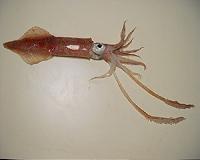 Squid Studies Provide Valuable Insights Into Hearing Mechanisms
Falmouth MA (SPX) Oct 27, 2010 The ordinary squid, Loligo pealii - best known until now as a kind of floating buffet for just about any fish in the sea - may be on the verge of becoming a scientific superstar, providing clues about the origin and evolution of the sense of hearing. In a hangar-like research building at the Woods Hole Oceanographic Institution (WHOI), biologist T. Aran Mooney is exploring virtually unchar ... read more |
|
|
| The content herein, unless otherwise known to be public domain, are Copyright 1995-2010 - SpaceDaily. AFP and UPI Wire Stories are copyright Agence France-Presse and United Press International. ESA Portal Reports are copyright European Space Agency. All NASA sourced material is public domain. Additional copyrights may apply in whole or part to other bona fide parties. Advertising does not imply endorsement,agreement or approval of any opinions, statements or information provided by SpaceDaily on any Web page published or hosted by SpaceDaily. Privacy Statement |


 del.icio.us
 Digg
Digg Reddit
 YahooMyWeb
 Google
 Facebook


