
 |
 |
 |
 |
 |
 |
 |
 |
 |

 |

Saint Petersburg (AFP) Nov 22, 2010 Ancient Chinese traditions of using products derived from tigers for medicine are encouraging poaching and threatening the Amur tiger which lives in Russia and China, experts said. The problem will be among those addressed during a summit this week in the Russian city of Saint Petersburg bringing together leaders from 13 countries where tigers live in the wild, including Russian Prime Minister Vladimir Putin and his Chinese counterpart Wen Jiabao. The demand for such products in China "is one of the main threats weighing on the Amur tiger," said Alexei Vaisman, coordinator of the World Wildlife Fund's TRAFFIC programme in Russia. In a study conducted in Chinese cities in 2007, 43 percent of those polled said they consumed products derived from tigers, including traditional medicines made from tiger bones, which in 1993 were officially removed from the traditional Chinese medicine pharmacopeia. Eighty-eight percent of those asked said they nonetheless knew the products were illegal. Grace Ge Gabriel, regional director for Asia at the International Fund for Animal Welfare (IFAW), is spearheading a campaign against the use of products derived from tigers in China and said efforts are being focused on youth. "We are showing a video in universities... If you talk to real Chinese professionals today most of them say they don't use tiger products any more. The idea is still engrained in older people, so we hope to educate the younger people so they can influence the older people." Vaisman said another problem is that China lacks "adequate controls on internal trafficking." "Patients believe in the virtues of these medicines and this faith accounts for 80 percent of their success. This influences authorities and the medicines are still sold," he said. This encourages poachers, mainly in Russia's Far East where most of the world's 450-500 Amur tigers live. China accounts for only 40-50 Amur tigers in the wild. "Russia and China have a long border together, most of the tigers live in Russia and it's very important to protect that border," Ge Gabriel said. "We believe most of the poachers are Russians. There is a motive, it is for trade.... If we stop the trade, we stop the poaching," she said. The two countries have agreements to cooperate to prevent trafficking and Russian customs agents have been specially trained to deal with the problem, "but there is corruption on the border," Vaisman said. Another problem that needs to be addressed is the linking of tiger habitats on both sides of the Chinese-Russian border, Ge Gabriel said, because "tigers of course don't travel with a passport." "Tigers need large areas, 250 square kilometres (100 square miles) of space for one tiger to find enough food to survive. The border regions need to be connected," she said. Such efforts have begun, Russian Natural Resources Minister Yury Trutnev said during the summit, and Russia and China are "in the process of creating trans-border zones to stabilise the tiger population in Russia and increase it in China." The summit, the first such meeting to bring together leaders from countries with tigers, is aimed saving the tiger from extinction and doubling the big cat's numbers by the next Year of the Tiger in 2022. Decades of tiger part trafficking and habitat destruction have slashed the roaming tiger's number from 100,000 a century ago to just 3,200 today and the WWF is warning that the species is on course for outright extinction.
Share This Article With Planet Earth
Related Links Darwin Today At TerraDaily.com

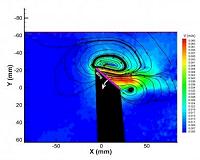 How Hummingbirds Fight The Wind
Washington DC (SPX) Nov 22, 2010 Hummingbirds rank among the world's largest and most accomplished hovering animals, but how do they manage it in gusty winds? A team of researchers at New Mexico State University, Los Alamos National Laboratory, Technische Universiteit Eindhoven, and Continuum Dynamics Inc. has built a robotic hummingbird wing to discover the answer, which they describe at the American Physical Society Div ... read more |
|
|
| The content herein, unless otherwise known to be public domain, are Copyright 1995-2010 - SpaceDaily. AFP and UPI Wire Stories are copyright Agence France-Presse and United Press International. ESA Portal Reports are copyright European Space Agency. All NASA sourced material is public domain. Additional copyrights may apply in whole or part to other bona fide parties. Advertising does not imply endorsement,agreement or approval of any opinions, statements or information provided by SpaceDaily on any Web page published or hosted by SpaceDaily. Privacy Statement |


 del.icio.us
 Digg
Digg Reddit
 YahooMyWeb
 Google
 Facebook


