
 |
 |
 |
 |
 |
 |
 |
 |
 |

 |

Rome, Italy (ESA) Jul 27, 2010 As a strong supporter of the benefits that space industry can bring to Europe, Vice-President of the European Commission and European Commissioner for Industry and Entrepreneurship, Antonio Tajani, visited ESA's ESRIN establishment in Italy. Vice-President Tajani was welcomed by the Director of Earth Observation Programmes, Volker Liebig, on his first visit to an ESA establishment since assuming his role as Commissioner for Industry and Entrepreneurship in February. Since the Global Monitoring for Environment and Security (GMES) initiative forms part of the Vice-President's portfolio on space, the visit to ESA's Centre for Earth Observation provided an opportunity to hear first-hand about the progress that has been made in the development of the space component and the challenges that lie ahead. In addition, he was given an overview of ESA, its programme for Earth observation, the expertise within ESRIN in managing the payload operations for Earth observation missions and the benefits that ESA's activities bring to Europe's industry and society. Vice-President Tajani's mandate also includes the Galileo navigation system which, like GMES, is a joint venture between the EC and ESA. Vice-President Tajani heard how ESA has six Earth observation missions in orbit, delivering more than 100 terabytes of data per year that are used in more than 3000 projects worldwide. These data not only advance science and our understanding of Earth, but also benefit the economy, provide vital information for policy-makers and improve the daily lives of European citizens. Examples were given of how Earth observation satellites have shown how sea-ice in the Arctic is changing as a result of climate change and how atmospheric monitoring has revealed nitrogen oxide pollution directly resulting from industrialisation. The Vice-President was also shown how information provided by satellites is invaluable for effective disaster management. Turning to the GMES Space Component, Vice-President Tajani was given an overview of the programme. With a total committed budget of euros 2.3 billion from ESA Member States and the European Commission, good progress has been achieved, although there are some challenges still to be overcome. Contracts to build the three pairs of GMES Sentinel-1, Sentinel-2 and Sentinel-3 satellites have been placed with industry. This means that the first 'A units' of the three missions are expected to be launched in 2012-13. These three missions are planned to orbit as pairs to maximise coverage. In addition, development is under way for Sentinel-5 Precursor, which will bridge the gap for data on atmospheric gases between Envisat and Sentinel-5. Contracts have also been placed for early studies for Sentinel-4 and Sentinel-5. GMES is a unique and complex endeavour, combining satellite and in situ data to benefit European policies and areas such as agriculture, fisheries, ship navigation and safety, urban planning and humanitarian aid. While much progress has been made, the main challenge ahead is associated with funding to ensure the continuous operation of GMES and, hence, uninterrupted user services. Approximately euros 560 million is necessary for satellite operations, launchers for the B satellites and procurement of critical parts for the C satellites. Only euros 107 million has been already approved by the GMES Initial Operations Regulation. From 2014, the operational phase of GMES will then require the EU funds as planned.
Share This Article With Planet Earth
Related Links ESA ESRIN GMES The latest information about the Commercial Satellite Industry

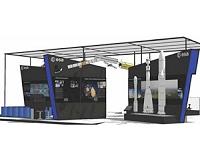 ESA At Farnborough Air Show
Paris, France (ESA) Jul 13, 2010 ESA, together with the UK Space Agency, the Italian space agency and industry, will be exhibiting its wide range of activities in a dedicated Space Zone at the Farnborough International Air Show during 19-25 July. The Space Zone brings together key players from space agencies and industry to highlight the increasing role of space in a rapidly changing world. ESA showcases the importance o ... read more |
|
|
| The content herein, unless otherwise known to be public domain, are Copyright 1995-2010 - SpaceDaily. AFP and UPI Wire Stories are copyright Agence France-Presse and United Press International. ESA Portal Reports are copyright European Space Agency. All NASA sourced material is public domain. Additional copyrights may apply in whole or part to other bona fide parties. Advertising does not imply endorsement,agreement or approval of any opinions, statements or information provided by SpaceDaily on any Web page published or hosted by SpaceDaily. Privacy Statement |


 del.icio.us
 Digg
Digg Reddit
 YahooMyWeb
 Google
 Facebook


