
 |
 |
 |
 |
 |
 |
 |
 |
 |

 |

Cancun, Mexico (AFP) Nov 11, 2010 Tropical fish swim past a surprising new sight beneath turquoise waters off the Mexican Caribbean beach resort of Cancun, occasionally nibbling at the bodies of 400 life-sized sculptures. Divers, aided by a crane on a boat, this month fixed into place the last pieces of "The Silent Evolution", which British artist Jason deCaires Taylor calls the largest ever underwater collection of contemporary sculpture. Some statues are naked, one is pregnant, an old man grimaces and a small child turns her head up toward the sun dancing on the surface of the Caribbean sea, as long hairs of yellow algae already cling to their faces and limbs. Together they form a growing artificial reef of art, some nine meters (30 feet) deep, in a unique museum to be inaugurated on November 27. The project started almost two years ago when the Cancun Marine Park sought a work from DeCaires Taylor, who had already created underwater installations off Grenada in the Caribbean and England, posted on www.underwatersculpture.com. "The first time I saw Jason's work was on the Internet. I really liked it. It has the magic touch of a sculptor who thinks about conservation," said Roberto Diaz, president of the Cancun nautical association. Park officials saw the sculptures as an attractive alternative to artificial reef structures, such as balls and pyramids, already in use. In the same way as artificial reefs, the art aims to draw some of the park's 750,000 annual visitors away from the natural reefs. They need to recover from the damage caused by boat anchors, hurricanes and careless tourists over the years, amid fears global warming may also be harming the growth of the coral. If current pressures continue unabated, 60 percent of the world's coral reefs may die completely by 2050, according to the US National Oceanic and Atmospheric Administration. DeCaires Taylor, a keen diver, moved from Britain to near Cancun to begin the work, seeking models in the street for his sculptures and working with a team of five locals. "I wrote down a list of what I needed: a young girl, an elderly lady, a Mayan man in his 20s ... and then we brought them into the studio and looked at who they were and what sort of pose would suit them," DeCaires Taylor told AFP in his steamy studio near Cancun. The models, including a three-year-old boy, stood or sat in their underwear as they were covered in vaseline and plaster during a process lasting about an hour. Their casts then created statues of mainly cement, as well as fiberglass -- similar components to those used on artificial reefs said to last up to 500 1years. The artwork, including blocks weighing up to five tonnes, cost some 250,000 dollars, and grew to double the size of initial plans. Plans for the Museo Subacuatico del Arte (MUSA) are also expanding, to eventually include 13 underwater "rooms," including works from other artists. "From an artistic point of view it's really, really interesting because you're dealing with completely different laws," DeCaires Taylor said. "Colours change very differently underwater, light is very different because it's affected by the surface of the sea. Your engagement with the work is very different." And in a different way from sculptures above water, the works will evolve as they interact with marine life, as sponges, plants and organisms are expected to grow over the eyes, ears and concrete bodies over the years. "People ask me 'is it finished?' but I don't consider it ended. This is just one phase of it," DeCaires Taylor said. "I've got to the point of putting them in the sea and then, as the piece is titled, it will evolve considerably after that."
Share This Article With Planet Earth
Related Links Darwin Today At TerraDaily.com

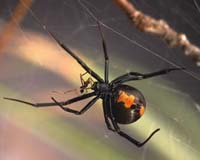 Australia's deadly redback spiders invade NZealand
Wellington (AFP) Nov 10, 2010 Australia's deadly redback spider has established itself in New Zealand, posing a significant risk to humans as it threatens to colonise major cities, researchers have found. The venomous redback, a relative of the black widow, probably hitched a ride to New Zealand on imported goods from Australia and had established itself at sites on both the North and South Islands, scientists said. ... read more |
|
|
| The content herein, unless otherwise known to be public domain, are Copyright 1995-2010 - SpaceDaily. AFP and UPI Wire Stories are copyright Agence France-Presse and United Press International. ESA Portal Reports are copyright European Space Agency. All NASA sourced material is public domain. Additional copyrights may apply in whole or part to other bona fide parties. Advertising does not imply endorsement,agreement or approval of any opinions, statements or information provided by SpaceDaily on any Web page published or hosted by SpaceDaily. Privacy Statement |


 del.icio.us
 Digg
Digg Reddit
 YahooMyWeb
 Google
 Facebook


