
 |
 |
 |
 |
 |
 |
 |
 |
 |

 |

Blacksburg VA (SPX) Dec 13, 2010 As the U.S. policy makers renew emphasis on the use of nuclear energy in their efforts to reduce the country's oil dependence, other factors come into play. One concern of paramount importance is the seismic hazard at the site where nuclear reactors are located. Russell A. Green, associate professor of civil and environmental engineering at Virginia Tech, spent five years as an earthquake engineer for the U.S. Defense Nuclear Facilities Safety Board in Washington, D.C., prior to becoming a university professor. Part of his responsibility at the safety board was to perform seismic safety analyses on the nation's defense nuclear facilities. "I found the greatest uncertainty in seismic analyses was related to the ground motions used in the analyses...Many of the facilities being analyzed were already built and operating, and the facilities were already heavily contaminated with radioactive material," Green said. An immediate concern then became how and which buildings to retrofit. The balance in the decision-making process was between using overly conservative ground motions and potentially wasting "hundreds of millions of dollars in unnecessary retrofits" versus using less demanding motions and potentially "placing facility workers, neighboring towns, and cities at risk," Green added. Green's concerns and expertise in earthquake engineering earned him a National Science Foundation CAREER Award in 2006 valued at more than $400,000. He has used this support for the development of procedures for collecting and analyzing data required for assessing the seismic hazard in regions where moderate to large earthquakes would have significant consequences, yet they remain low probability events. Green said a "huge shift" in the engineering profession's approach to reducing seismic risk has occurred during the past decade. Building codes have been modified to include performance-based earthquake engineering (PBEE) concepts. This differs from the previous traditional design approach that used "life safety as the primary design goal," Green explained. "PBEE is based on the premise that performance can be predicted and evaluated with quantifiable confidence, allowing the engineer, together with the client, to make intelligent and informed trade-offs based on life-cycle considerations rather than construction costs alone." To implement PBEE and to calculate the annual probability of specific losses due to seismic events, engineers need to know the fragility of structural systems and the probabilistically quantified seismic hazard. To conduct his research, Green is focusing on paleoseismology, the study of the timing, location, and size of prehistoric/pre-instrumental earthquakes, ranging from those that occurred hundreds to tens of thousands of years ago. "I believe that earthquake engineering encompasses geology, seismology, geotechnical engineering, structural engineering, urban planning, and emergency response, " Green said. "The appropriate selection of ground motions is particularly difficult because many critical facilities are located in the central and eastern U.S. and in the Pacific Northwest," Green said. "We know moderate to large earthquakes have occurred in these regions. We just do not know how large the events were, how often they occurred, or the characteristics of the associated ground shaking, such as duration, amplitude, and frequency content." Unlike many places in the western U.S. where excavations can be used to determine the past movement on earthquake faults, in the central-eastern U.S. the locations of most faults are unknown and/or the faults are too deep to excavate. As a result, Green is concentrating his work on the development and validation of paleoliquefaction procedures. Soil liquefaction is the transition of soil from a solid to a liquefied state. Earthquakes are one cause of liquefaction, with the evidence of liquefaction often remaining in the soil profile for many thousands of years after the earthquake. "Paleoliquefaction investigations are the most plausible way to determine the recurrence time of moderate to large earthquakes in the central-eastern U.S. ," Green said. "By extending the earthquake record into prehistoric times, paleoseismic investigations remove one of the major obstacles to implementing PBEE across the U.S." To determine the age of a paleoliquefaction feature, researchers might use any one of a number of techniques, including: radiocarbon dating, optically stimulated luminescence, or archeological evidence. Green said his work will address the "gaps in knowledge that typically stem from uncertainties related to analytical techniques used in back-calculations, the amount and quantity of paleoliquefaction data, and the significance of changes in the geotechnical properties of post-liquefied sediments such as aging and density changes." In addition to his work studying paleoearthquakes, Green has also been involved in performing field studies of several recent earthquakes. He has performed post-earthquake field studies of the 2008 Mt. Carmel, Ill., magnitude 5.2 earthquake, the 2008 Iwate Miyagi-Nairiku, Japan, magnitude 6.9 earthquake, the 2010 Haiti, magnitude 7.0 earthquake, and the 2010 Darfield, New Zealand, magnitude 7.1 earthquake. The latter two field studies were National Science Foundation sponsored Geo-Engineering Extremes Events Reconnaissance (GEER) investigations, with Green serving as the US Team leader for the Darfield earthquake study.
Share This Article With Planet Earth
Related Links Virginia Tech Tectonic Science and News

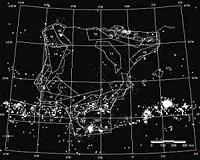 Researchers Find Mathematical Patterns To Forecast Earthquakes
Seville, Spain (SPX) Dec 03, 2010 Researchers from the Universidad Pablo de Olavide (UPO) and the Universidad de Sevilla (US) have found patterns of behaviour that occur before an earthquake on the Iberian peninsula. The team used clustering techniques to forecast medium-large seismic movements when certain circumstances coincide. "Using mathematical techniques, we have found patterns when medium-large earthquakes happen, ... read more |
|
|
| The content herein, unless otherwise known to be public domain, are Copyright 1995-2010 - SpaceDaily. AFP and UPI Wire Stories are copyright Agence France-Presse and United Press International. ESA Portal Reports are copyright European Space Agency. All NASA sourced material is public domain. Additional copyrights may apply in whole or part to other bona fide parties. Advertising does not imply endorsement,agreement or approval of any opinions, statements or information provided by SpaceDaily on any Web page published or hosted by SpaceDaily. Privacy Statement |


 del.icio.us
 Digg
Digg Reddit
 YahooMyWeb
 Google
 Facebook


