
 |
 |
 |
 |
 |
 |
 |
 |
 |

 |

Phoenix (UPI) Jul 6, 2010 A $17 million U.S. army contract won by BAE Systems will enable the company to introduce sensors that perform head-borne energy analysis and diagnose war-related brain trauma among soldiers returning from combat in Afghanistan and Iraq. BAE Systems said the award is part of an indefinite-delivery, indefinite-quantity agreement that would be worth a maximum $105 million. Combat-related traumatic brain injuries are on the increase and demand urgent attention, and the contract is a response to that need. Medical professionals say that TBIs "are fast becoming a signature injury of the Iraq and Afghanistan wars," BAE Systems said in a news release. Analysts said the BAE Systems' army contract indicated a much more challenging issue of medical care for the returnees that could be indefinite. Designed to better monitor soldiers and help identify risk levels for combat-related TBIs, BAE Systems introduced its first Headborne Energy Analysis and Diagnostic Systems sensor to the military in 2008. Since then, it said, nearly 7,000 of the company's HEADS units have been fielded to the U.S. Army and U.S. Marine Corps, which the company said was a "testament to BAE Systems' commitment to integrating innovative lifesaving technologies into survivability products for troops." With the new order, thousands of the company's Generation II HEADS helmet sensors will be produced and fitted in the combat helmets for U.S. troops serving abroad. The eventual total cost of the equipment over the coming years is yet to be worked out, analysts said. "Diagnosing mild to moderate combat-related TBIs can be challenging. For example, following an explosion from a roadside bomb, soldiers will sometimes continue with their mission, unaware that the concussion from the blast may have lingering effects," said Joe Coltman, vice president of BAE Systems' Personnel Protection Systems business. "With the Generation II HEADS sensor, even if the injury isn't obvious, once the sensor collects data indicating a blast has exceeded a certain threshold, a LED light located on the sensor and will be activated and begin blinking, signifying to soldiers that they may have sustained a concussion warranting immediate attention." While alerting soldiers and those around them of possible concussions, the HEADS smart sensor is designed to provide medical professionals with important data that may help determine the severity of a possible TBI. The sensor utilizes radio frequency technology, said Coltman. "If a soldier is exposed to a blast, possibly sustaining a concussion, not only will the HEADS visual display be triggered at the time of the event, but once the soldier enters a specified area, such as forward operating base or dining facility, a series of strategically placed antennae will scan all available HEADS units and send data to a computer, identifying any soldiers who may have sustained a blast-related brain injury," he said. The sensor itself is small, lightweight and can be secured inside virtually any combat helmet. Although imperceptible to the wearer, it is designed to continuously collect critical, potentially lifesaving data, including impact location, magnitude, duration, blast pressures, angular and linear accelerations as well as the exact times of single or multiple blast events. That information is then stored until it can be downloaded and analyzed by medical teams using a simple USB or wireless connection. Compatible with most helmets, the HEADS sensor is unobtrusive and won't interfere with additional helmet-mounted equipment soldiers may need, such as goggles and other sensors. BAE said it would start delivering the sensors by April 2011.
Share This Article With Planet Earth
Related Links The latest in Military Technology for the 21st century at SpaceWar.com

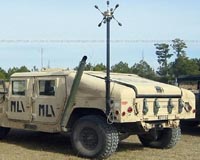 Acoustic Sensor And Netted Combat System Linked For Enhanced Counter Sniper Capability
McKinney, Texas (SPX) Jul 05, 2010 Raytheon has linked its Boomerang acoustic sensor and network-ready Long Range Advanced Scout Surveillance System to provide an enhanced counter sniper solution for the warfighter. "Connecting Boomerang and netted LRAS3 is a plug-and-play operation that results in a powerful counter sniper capability," said Glynn Raymer, vice president, Raytheon Network Centric Systems Combat Systems. ... read more |
|
|
| The content herein, unless otherwise known to be public domain, are Copyright 1995-2010 - SpaceDaily. AFP and UPI Wire Stories are copyright Agence France-Presse and United Press International. ESA Portal Reports are copyright European Space Agency. All NASA sourced material is public domain. Additional copyrights may apply in whole or part to other bona fide parties. Advertising does not imply endorsement,agreement or approval of any opinions, statements or information provided by SpaceDaily on any Web page published or hosted by SpaceDaily. Privacy Statement |


 del.icio.us
 Digg
Digg Reddit
 YahooMyWeb
 Google
 Facebook


