
 |
 |
 |
 |
 |
 |
 |
 |
 |

 |

Greenbelt MD (SPX) Feb 11, 2011 NASA's Cloud-Aerosol Lidar and Infrared Pathfinder Satellite Observation (CALIPSO) satellite was in the right place at the right time in early 2011. On January 4, while flying past the east coast of Greenland, CALIPSO caught a top-down glimpse of an unusual atmospheric phenomenon-polar stratospheric clouds (PSCs), also known as nacreous clouds. Clouds do not usually form in the stratosphere because of the dry conditions. But in the polar regions, often near mountain ranges, atmospheric gravity waves in the lower atmosphere (troposphere) can push just enough moisture into the high altitudes. The extremely low temperatures of the stratosphere condense ice and nitric acid into clouds that play an important role in depletion of stratospheric ozone. The top image was assembled from data from CALIPSO's Light Detection and Ranging instrument, or lidar, which sends pulses of laser light into Earth's atmosphere. The light bounces off particles in the air and reflects back to a receiver that can measure the distance to and thickness of the particle- and air masses below. The data was acquired between 4:30 and 4:44 Universal Time on January 4, 2011, as the satellite flew 1120 kilometers (695 miles) from north to south over the Greenland Sea and Denmark Strait, as depicted in the map above. CALIPSO has observed stratospheric clouds before, but never one this high, says Mike Pitts, an atmospheric scientist at NASA's Langley Research Center. This cloud reached an altitude of more than 30 kilometers (19 miles). The cloud was the result of mountain waves in the atmosphere, which form when stable air masses pass over mountains or high ice sheets, providing vertical lift. Pitts said such stratospheric ice clouds are rare because they only form when the jet stream in the Arctic is properly aligned with the edge of the polar vortex, a large air pressure system over the poles. The circulating air in the vortex needs to align with the jet stream to create enough vertical motion and propagate the waves to the upper atmosphere. The January 4 cloud was formed when those winds aligned and sent an air mass up over the high ice sheet and mountains of Greenland. NASA Earth Observatory image by Jesse Allen, using CALIPSO data provided by the Langley Atmospheric Science Data Center, with meteorological analyses by Andreas Dornbrack, Institute of Atmospheric Physics, DLR Oberpfaffenhofen, Germany. Caption by Kristyn Ecochard and Michael Carlowicz. Instrument: CALIPSO - CALIOP
Share This Article With Planet Earth
Related Links Earth Observatory The Air We Breathe at TerraDaily.com

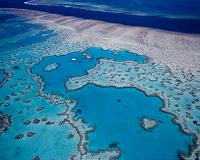 Speeding Up Mother Nature's Very Own CO2 Mitigation Process
Livermore CA (SPX) Jan 21, 2011 Using seawater and calcium to remove carbon dioxide (CO2) in a natural gas power plant's flue stream, and then pumping the resulting calcium bicarbonate in the sea, could be beneficial to the oceans' marine life. Greg Rau, a senior scientist with the Institute of Marine Sciences at UC Santa Cruz and who also works in the Carbon Management Program at Lawrence Livermore National Laboratory, ... read more |
|
|
| The content herein, unless otherwise known to be public domain, are Copyright 1995-2010 - SpaceDaily. AFP and UPI Wire Stories are copyright Agence France-Presse and United Press International. ESA Portal Reports are copyright European Space Agency. All NASA sourced material is public domain. Additional copyrights may apply in whole or part to other bona fide parties. Advertising does not imply endorsement,agreement or approval of any opinions, statements or information provided by SpaceDaily on any Web page published or hosted by SpaceDaily. Privacy Statement |


 del.icio.us
 Digg
Digg Reddit
 YahooMyWeb
 Google
 Facebook


