
 |
 |
 |
 |
 |
 |
 |
 |
 |

 |

Washington DC (SPX) Apr 08, 2011 The act of mind reading is something usually reserved for science-fiction movies but researchers in America have used a technique, usually associated with identifying epilepsy, for the first time to show that a computer can listen to our thoughts. In a new study, scientists from Washington University demonstrated that humans can control a cursor on a computer screen using words spoken out loud and in their head, holding huge applications for patients who may have lost their speech through brain injury or disabled patients with limited movement. By directly connecting the patient's brain to a computer, the researchers showed that the computer could be controlled with up to 90% accuracy even when no prior training was given. The study, published Thursday 7 April, in IOP Publishing's Journal of Neural Engineering, involves a technique called electrocortiography (ECoG) - the placing of electrodes directly onto a patient's brain to record electrical activity - which has previously been used to identify regions of the brain that cause epilepsy and has led to effective treatments. More recently, the process of ECoG has been applied to brain-computer interfaces (BCI) which aim to assist or repair brain functions and have already been used to restore the sight of one patient and stimulate limb movement in others. The study used four patients, between the ages of 36??, who suffered from epilepsy. Each patient was given a craniotomy - an invasive procedure used to place an electrode onto the brain of the patient - and was monitored whilst undergoing trials. During the trials, the electrodes placed on the patient's brain would emit signals which were acquired, processed, and stored on a computer. The trials involved the patients sitting in front of a screen and trying to move a cursor toward a target using pre-defined words that were associated with specific directions. For instance, saying or thinking of the word "AH" would move the cursor right. At some point in the future researchers hope to permanently insert implants into a patient's brain to help restore functionality and, even more impressively, read someone's mind. Dr. Eric C Leuthardt, the lead author, of Washington University School of Medicine, said: "This is one of the earliest examples, to a very, very small extent, of what is called 'reading minds' - detecting what people are saying to themselves in their internal dialogue." This study was the first to demonstrate microscale ECoG recordings meaning that future operations that require this technology may use an implant that is very small and minimally invasive. Also, the study identified that speech intentions can be acquired through a site that is less than a centimetre wide which would require only a small insertion into the brain. This would greatly reduce the risk of a surgical procedure. Dr Leuthardt continued, "We want to see if we can not just detect when you're saying dog, tree, tool or some other word, but also learn what the pure idea of that looks like in your mind. It's exciting and a little scary to think of reading minds, but it has incredible potential for people who can't communicate or are suffering from other disabilities." The journal paper can be downloaded here.
Share This Article With Planet Earth
Related Links Institute of Physics Computer Chip Architecture, Technology and Manufacture Nano Technology News From SpaceMart.com

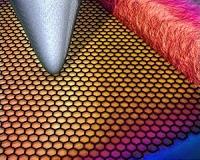 Self-Cooling Observed In Graphene Electronics
Champaign IL (SPX) Apr 06, 2011 With the first observation of thermoelectric effects at graphene contacts, University of Illinois researchers found that graphene transistors have a nanoscale cooling effect that reduces their temperature. Led by mechanical science and engineering professor William King and electrical and computer engineering professor Eric Pop, the team will publish its findings in the April 3 advance onl ... read more |
|
|
| The content herein, unless otherwise known to be public domain, are Copyright 1995-2010 - SpaceDaily. AFP and UPI Wire Stories are copyright Agence France-Presse and United Press International. ESA Portal Reports are copyright European Space Agency. All NASA sourced material is public domain. Additional copyrights may apply in whole or part to other bona fide parties. Advertising does not imply endorsement,agreement or approval of any opinions, statements or information provided by SpaceDaily on any Web page published or hosted by SpaceDaily. Privacy Statement |


 del.icio.us
 Digg
Digg Reddit
 YahooMyWeb
 Google
 Facebook


