
 |
 |
 |
 |
 |
 |
 |
 |
 |

 |

Los Angeles (UPI) Jul 19, 2010 A new earthquake theory suggests doughnut-shaped patterns of temblors build up over decades to a final large earthquake in the doughnut "hole," scientists say. The circular pattern theory, called a Mogi doughnut after the Japanese seismologist who proposed it, may lead to improved earthquake forecasts, the Los Angeles Times reported Sunday. Recent earthquakes near Eureka and Palm Springs in California and Mexicali in Mexico, combined with large seismic upheavals like the 1989 Loma Prieta and 1994 Northridge temblors, could be precursors to a far larger rupture somewhere in the doughnut "hole," University of California, Davis physicist and geologist John Rundle and his colleagues say. They just don't know exactly where or when, the Times reported. In the past, experts say, little attention was paid to how faults were connected or whether one earthquake could increase the chances of a quake on another fault. But now they believe these connections are important and this year's earthquakes along the Mexican border and near Palm Springs are evidence of the concept. "Previously we would identify a fault, map it and name it," Lisa Grant Ludwig, a University of California, Irvine earthquake expert, said. "What we've really got here is a network of faults. Maybe that's what we need to be thinking: more big-picture."
earlier related report The new theory may offer understanding of the geological evolution of Earth in the past 50 million years, ScienceDaily.com reported Saturday. Researchers at Australia's Monash University and the University of California, San Diego say the speed of plate movements is affected by the size of the subduction zones, those areas where one moving plate dives below another, ScienceDaily said. "The scalings for how subducted plates sink in the earth's mantle are based on essentially the same fluid dynamics that describe how a penny sinks through a jar of honey," UCSD geophysicist Dave Stegman says. "Computer models demonstrate that the subducted portion of a tectonic plate pulls on the portion of the plate that remains on the earth's surface," Stegman says. "This pull results in either the motion of the plate, or the motion of the plate boundary, with the size of the subduction zone determining how much of each." This discovery explains why the large Australian, Nazca and Pacific plates can move up to four times faster than the smaller African, Eurasian and Juan de Fuca plates, researchers say. "The plates themselves are controlling the process more than the mantle underneath," Stegman says. " It means Earth is really more of a top-down system than the predominantly held view that plate motion is being driven from the bottom up."
Share This Article With Planet Earth
Related Links Tectonic Science and News

 Flow In Earth's Mantle Moves Mountains
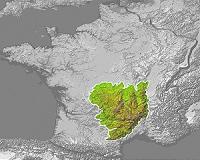
Los Angeles CA (SPX) Jun 07, 2010 If tectonic plate collisions cause volcanic eruptions, as every fifth grader knows, why do some volcanoes erupt far from a plate boundary? A study in Nature suggests that volcanoes and mountains in the Mediterranean can grow from the pressure of the semi-liquid mantle pushing on Earth's crust from below. "The rise and subsidence of different points of the earth is not restricted to the exa ... read more |
|
|
| The content herein, unless otherwise known to be public domain, are Copyright 1995-2010 - SpaceDaily. AFP and UPI Wire Stories are copyright Agence France-Presse and United Press International. ESA Portal Reports are copyright European Space Agency. All NASA sourced material is public domain. Additional copyrights may apply in whole or part to other bona fide parties. Advertising does not imply endorsement,agreement or approval of any opinions, statements or information provided by SpaceDaily on any Web page published or hosted by SpaceDaily. Privacy Statement |


 del.icio.us
 Digg
Digg Reddit
 YahooMyWeb
 Google
 Facebook


