|
 |
 |
 |
 |
 |
 |
 |

| . |  |
. |

|
|
. |

 by Staff Writers Paris (SPX) Jun 20, 2011
The European Commission recently set out the EU's main space priorities, which include protection of Europe's space assets. The affirmation spotlights the Space Situational Awareness Preparatory Programme as a strategic European necessity and a cornerstone of Europe's future in space. In April 2011, the European Commission (EC) released a communication entitled "Towards a space strategy for the European Union that benefits its citizens" outlining the crucial role of space for European economies and societies. The document is a powerful endorsement for the goals of ESA's Space Situational Awareness (SSA) Preparatory Programme, which formally began preparations in January 2009. SSA: detecting space environment hazards ESA's SSA preparatory programme aims to support European autonomy by providing reliable information and services on the space environment, particularly on the hazards to critical satellites in orbit and infrastructure on the ground. In general, these hazards stem from orbiting debris colliding with working satellites, the harmful effects of space weather on satellites and ground infrastructure, and potential strikes on Earth by objects such as asteroids and comets. Yet today, Europe lacks the full complement of telescopes, radars and data processing to warn of space hazards.
Strong agreement at European levels "There is strong agreement at national and European levels that we need services based on European assets that help us to protect our satellites and ground infrastructure against threats from orbital debris, space weather or possible impacts," says ESA's Nicolas Bobrinsky, Head of the SSA Programme Office. SSA activities are accelerating this year with a new testbed for improved analysis of space surveillance data at ESA's European Space Astronomy Centre in Spain, which will issue test warnings to satellite operators. Similar test facilities are also being set up for space weather and objects such as asteroids.
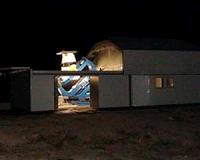
SSA: helping European autonomy and creating high-tech jobs In 2012, SSA's initial phase will culminate with a detailed technical plan for the future fully operational system, to be put before the ESA Ministerial Council at the end of that year for approval. "The plan will show how existing European research capabilities, such as the scanning radar at the Fraunhofer Institute near Bonn or ESA's own Optical Ground Station on the Spanish island of Tenerife, can be efficiently integrated into the system. It will also specify the new sensors that must be built in order to secure Europe's autonomy," says Nicolas. He adds that SSA is a major opportunity for European industry that will provide skilled jobs and targeted investment. "SSA will ultimately help secure in Europe a satisfactory level of autonomy in a strategic space domain and enable us to better cooperate with and assist all space-faring nations."
|
. |
|
| The content herein, unless otherwise known to be public domain, are Copyright 1995-2011 - Space Media Network. AFP and UPI Wire Stories are copyright Agence France-Presse and United Press International. ESA Portal Reports are copyright European Space Agency. All NASA sourced material is public domain. Additional copyrights may apply in whole or part to other bona fide parties. Advertising does not imply endorsement,agreement or approval of any opinions, statements or information provided by Space Media Network on any Web page published or hosted by Space Media Network. Privacy Statement |

 del.icio.us
 Digg
Digg Reddit
 Google