
 |
 |
 |
 |
 |
 |
 |
 |
 |

 |

Washington DC (SPX) Feb 25, 2011 Wheat growers in the Southwest have a better idea about how to adjust to climate change in the decades ahead, thanks to U.S. Department of Agriculture (USDA) scientists in Arizona. Researchers with the USDA's Agricultural Research Service (ARS) installed infrared heaters in experimental wheat fields at the agency's Arid-Land Agricultural Research Center in Maricopa, Ariz., to simulate growing conditions expected by 2050. ARS is USDA's principal intramural scientific research agency, and this research supports the USDA priority of responding to climate change. Wheat is normally planted in Arizona in mid-winter, harvested in late May and irrigated throughout its growing season. Temperatures can range from below freezing in winter to above 100 degrees Fahrenheit in May. But increasing temperatures can drastically reduce yields and increase the threat of drought, making climate change a major concern. The scientists planted wheat every six weeks between March of 2007 and May of 2009 and applied heat to six of 15 plantings, warming the crops planted each year in March, December, and September. They measured canopy conditions to ensure daytime temperatures in the heated plots rose by 2.7 degrees Fahrenheit and nighttime temperatures rose by 5 or 6 degrees. The team included Bruce Kimball, a retired ARS soil scientist who was the project leader; ARS plant physiologists Gerard Wall and Jeffrey White; and Michael Ottman, an agronomist with the University of Arizona. The researchers used infrared (IR) heaters suspended above the plants, using a system known as a Temperature Free-Air Controlled Enhancement (T-FACE) apparatus. Developed by Kimball, T-FACE enables scientists to raise the temperature of experimental crops in open fields. The technology is also used by ARS researchers elsewhere and by more than a dozen other research groups around the world. As expected, the heaters accelerated growth, increased soil temperatures, reduced soil moisture, induced mild water stress on the crops and had a nominal effect on photosynthesis. But effects on yields depended on when the wheat was planted. When heat was applied to wheat planted in mid-winter, it grew faster, with a growth cycle that was ahead by a week, but there were no major differences in yield. But adding heat to wheat planted in September enabled the wheat to survive frosts between Christmas and New Year's both years with only moderate yield loss. Wheat planted at the same time in the unheated plots yielded nothing. The results, published in Global Change Biology, will provide guidance to growers on how to adjust planting schedules as the climate warms. They also show the effectiveness of the T-FACE system for investigating climate change impacts.
Share This Article With Planet Earth
Related Links USDA Agricultural Research Service (ARS) Farming Today - Suppliers and Technology

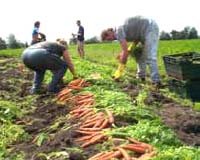 Transitioning To Organic Farming
Madison WI (SPX) Feb 25, 2011 As the organic food trend continues to grow; more farmers are converting from conventional agriculture to organic production. One of the fastest growing markets in the U.S. is the production of organic milk. The growth of this industry has prompted many farmers to transition their land to organic feed grain production. With transition on the rise, it is necessary for these farmers to have effect ... read more |
|
|
| The content herein, unless otherwise known to be public domain, are Copyright 1995-2010 - SpaceDaily. AFP and UPI Wire Stories are copyright Agence France-Presse and United Press International. ESA Portal Reports are copyright European Space Agency. All NASA sourced material is public domain. Additional copyrights may apply in whole or part to other bona fide parties. Advertising does not imply endorsement,agreement or approval of any opinions, statements or information provided by SpaceDaily on any Web page published or hosted by SpaceDaily. Privacy Statement |


 del.icio.us
 Digg
Digg Reddit
 YahooMyWeb
 Google
 Facebook


