|
 |
 |
 |
 |
 |
 |
 |

| . |  |
. |

|
|
. |

 by Staff Writers Melbourne, Australia (SPX) Sep 15, 2011
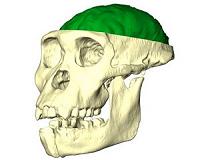
Researchers have confirmed the age of possibly our oldest direct human ancestor at 1.98 million years old. The discovery was made after researchers conducted further dating of the early human fossils, Australopithecus sediba, found in South Africa last year. A series of studies carried out on newly exposed cave sediments at the Malapa Cave site in South Africa, where the fossils were found, has assisted researchers to determine their more precise age at 1.98 million years old, making the Malapa site one of the best dated early human sites in the world. A series of papers published in a special issue of the prestigious international journal Science provide a new, more precise age for the fossils, as well as more detailed studies of the hands, feet, pelvis and brain. Uranium lead dating of the flowstone, conducted by the University of Melbourne combined with palaeomagnetic analysis sediments surrounding the fossils, conducted by La Trobe University provide the tightly constrained new age. The team was able to pin down the age of the fossils to within 3000 years of 1.98 million years, a massive advance on the age range of around 200,000 years from the 2010 estimate. Dr Robyn Pickering of the University of Melbourne's School of Earth Sciences, a lead researcher involved in the dating of the flowstone surrounding the fossils said researchers had long been searching for fossils from this time period to answer questions about the beginnings of our own genus Homo. "Knowing the age of the fossils is critical to placing them in our family tree, and this new age means that Australopithecus sediba is the current best candidate for our most distant human ancestor." "The results of these studies present arguably the most precise dates ever achieved for any early human fossils," she said. It appears the fossils were deposited in the Malapa Cave during a 3,000-year period around 1.98 million years when the Earth's magnetic field reversed itself by 180 degrees and back again. Dr Andy Herries from the Archaeology Program at La Trobe University who undertook the palaeomagnetic analysis said our ability to date and correctly identify these rare magnetic reversal events was crucial. "They enable us to better date fossil and archaeological sites in the future, as well as to understand the possible effects they have on climate, plants and animals," he said. Professor Paul Dirks from James Cook University and Professor Lee Berger of the University of the Witwatersrand in Johannesburg led the team that originally discovered the fossils in 2008. "It is through the new exposures and our understanding of the stratigraphy of the site, together with the advances we've made in the dating techniques that we can be even more precise now," Professor Dirk said. "The strong collaboration between South African and Australian universities has allowed us to push the boundaries of what was once thought possible in dating critical moments in early human origins in Africa," said Professor Berger. Related Links University of Melbourne All About Human Beings and How We Got To Be Here
|
. |
|
| The content herein, unless otherwise known to be public domain, are Copyright 1995-2011 - Space Media Network. AFP and UPI Wire Stories are copyright Agence France-Presse and United Press International. ESA Portal Reports are copyright European Space Agency. All NASA sourced material is public domain. Additional copyrights may apply in whole or part to other bona fide parties. Advertising does not imply endorsement,agreement or approval of any opinions, statements or information provided by Space Media Network on any Web page published or hosted by Space Media Network. Privacy Statement |

 del.icio.us
 Digg
Digg Reddit
 Google