|
 |
 |
 |
 |
 |
 |
 |

| . |  |
. |

|
|
. |

 by Staff Writers Tokyo (AFP) Oct 18, 2011
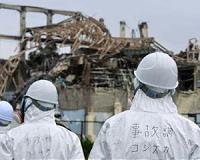
Fukushima City began Tuesday its first decontamination of private properties, seven months after the worst atomic accident since Chernobyl spread radioactive materials over eastern Japan. The first such organised cleanup of peoples' homes by an affected municipality follows work by various communities in northeast Japan to decontaminate public areas such as schools, parks and daycare centres. Prime Minister Yoshihiko Noda visited the city for the second time since he took office less than two months ago, with many residents voicing frustration over what they see as a slow government response to the crisis. Tuesday's clean up comes amid growing concerns that potentially harmful contamination spread more widely than thought amid discoveries of radiation hot spots in areas such Chiba and in Tokyo more than 200 kilometres away. Fukushima City is home to roughly 300,000 residents and sits 60 kilometres (35 miles) northwest of the Fukushima Daiichi nuclear plant crippled in the March 11 earthquake and tsunami, that left around 20,000 dead or missing. Radiation emissions from the plant have since fallen as workers race to bring its crippled reactors into a safe state of cold shutdown by year-end, but Japan faces a huge operation to decontaminate areas nearby. Areas northwest of the plant were hit hardest by radiation due to wind patterns at the peak of the crisis. Tens of thousands remain evacuated from homes and businesses in a 20 kilometre (12 mile) radius no-go zone around the plant and some areas beyond. In Fukushima City, authorities plan to clean around 110,000 houses as well as streets and public buildings. On Tuesday work crews wearing face masks used high pressure hoses to wash down houses in the Onami district, where elevated levels of radiation contamination have been detected. They also cut trees in gardens and excavated top soil with the aim of reducing radioactivity readings there to below 1.0 microsievert per hour. Yoshiharu Suda, whose house was among the first to be cleaned, said he wished the decontamination effort had been made earlier. "I think it might be too late," he told national broadcaster NHK, standing in front of his house where radiation readings double the government target were detected Monday. The task of restoring towns and villages even in lightly contaminated zones is complicated, with high costs and logistical issues of where to store soil and sludge contaminated with substances such as caesium after it is removed. The government has sought to calm public fears and overcome mistrust of official radiation surveys, claiming that areas away from the immediate vicinities of the wrecked plant should be safe. But concerned citizens armed with their own measuring tools have been finding small localised "hot spots" with high radiation levels. In the Adachi ward in Tokyo, a drain in the back of a school pool registered 3.99 microsieverts per hour of radiation Monday night, prompting officials to decontaminate the area. Based on the Japanese science ministry's criteria, that level is equivalent to an annual dose of about 21 millisieverts -- above the 20 millisievert level that mandates a public evacuation. National Broadcaster NHK on Friday reported that a citizens' group in Funabashi City in Chiba, east of Tokyo, detected radiation levels of up to 5.82 microsieverts per hour at a local park, compared to official readings of 1.55 microsieverts per hour at the site. Variable winds, weather and topography result in an uneven spread of contamination, experts say, and radioactive elements tend to concentrate in places where dust and rain water accumulate such as drains and ditches. The accident has discouraged consumers from buying farm produce from Fukushima and surrounding regions following reported cases of contaminated water, beef, vegetables, tea and seafood.
Bringing Order To A World Of Disasters A world of storm and tempest When the Earth Quakes
|
. |
|
| The content herein, unless otherwise known to be public domain, are Copyright 1995-2011 - Space Media Network. AFP and UPI Wire Stories are copyright Agence France-Presse and United Press International. ESA Portal Reports are copyright European Space Agency. All NASA sourced material is public domain. Additional copyrights may apply in whole or part to other bona fide parties. Advertising does not imply endorsement,agreement or approval of any opinions, statements or information provided by Space Media Network on any Web page published or hosted by Space Media Network. Privacy Statement |

 del.icio.us
 Digg
Digg Reddit
 Google