
 |
 |
 |
 |
 |
 |
 |
 |
 |

 |

Vladivostok, Russia (SPX) Mar 01, 2011 The GLONASS satellite communications system on Monday started operation on Vladivostok's municipal transport. The satellite equipment is installed in all 78 Vladivostok municipal buses, trolleybuses and trams, as well as in dozens of buses of commercial carriers. At the next stage passenger boats, ferries and more than two hundred commercial buses will also be equipped with this system. The press service of the city administration told Itar-Tass that the data on urban transport are transmitted to the control complex, where the manager is watching routes, motion graphics, speed and fuel consumption. In addition, the satellite map shows all the bus stop zones entering which the stops' names are automatically voiced in the passenger compartment. The next stage of modernisation of urban transport in Vladivostok will be the introduction of the electronic fare payment system. Passengers will be able to pay for travel using social or banking cards, and portable terminals will be installed in the compartments of buses, trolleybuses and trams. GLONASS (GLObal NAvigation Satellite System) is a radio-based satellite navigation system operated for the Russian government by the Russian Space Forces. It is an alternative and complementary to the United States' Global Positioning System (GPS), the Chinese Compass navigation system, and the planned Galileo positioning system of the European Union (EU). Development on the GLONASS began in the Soviet Union in 1976. Beginning on 12 October 1982, numerous rocket launches added satellites to the system until the constellation was completed in 1995. Following completion, the system fell into disrepair with the collapse of the Russian economy. In the early 2000s, under Vladimir Putin's presidency, the restoration of the system was made a top government priority and funding was substantially increased. GLONASS is currently the most expensive program of the Russian Federal Space Agency, consuming a third of its budget in 2010. By 2010, GLONASS had achieved 100 percent coverage of Russia's territory. As of February 2011, the constellation consists of 22 operational satellites, short of the 24 satellites needed to provide continuous global coverage, and is expected to be completed during 2011. The GLONASS satellites designs have undergone several upgrades, with the latest version being GLONASS-K. On Saturday, the first new-generation satellite Glonass-K was successfully put into the planned orbit. The Soyuz rocket, which was launched from Plesetsk cosmodrome at 06:07 Moscow time on Saturday, with the Fregat booster at 09:39 Moscow time successfully delivered the satellite to the orbit. The Glonass-K separated as planned. Telemetric contact with the satellite is maintained. Its onboard systems are functioning as normal, the Space Troops' spokesman Alexei Zolotukhin told Itar-Tass. The satellite will work in the 19,100-km-altitude and 64.3-degree-inclination orbit. It is a new third-generation satellite of the GLONASS system. It differs from the previous Glonass-M generation - it is expected to work for ten years (but not 5-7 as a Glonass-M), it weighs less - 935 kilogrammes instead of 1,415 and its navigation system is more reliable with the third frequency of L-band. Besides it has equipment of the international search and rescue system COSPAS-SARTAR. It was the first launch of a Glonass satellite from Plesetsk cosmodrome and with a Soyuz rocket (earlier all the satellites of the system were carried by Protons from Baikonur). According to the Machine-Building Central Scientific Research Institute, as of February 25, there were 26 satellites in the GLONASS orbital group. Twenty two of them are used, and four are put out of operation for technical maintenance. For a GLONASS navigation signal to be received continuously all over Russia's territory, at least 18 working satellites are needed, and 24 on the global scale.
Share This Article With Planet Earth
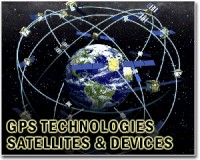
Related Links - GPS Applications, Technology and Suppliers

 Russia launches key satellite on second attempt
Moscow (AFP) Feb 26, 2011 Russia on Saturday successfully launched a satellite vital to the deployment of its own navigation system after the failure of an earlier attempt prompted the Kremlin to sack two top space officials. The Federal Space Agency said in a statement that the high-tech Glonass-K satellite reached its intended orbit about four hours after blasting off on top a Soyuz-2 rocket from Russia's northern ... read more |
|
|
| The content herein, unless otherwise known to be public domain, are Copyright 1995-2010 - SpaceDaily. AFP and UPI Wire Stories are copyright Agence France-Presse and United Press International. ESA Portal Reports are copyright European Space Agency. All NASA sourced material is public domain. Additional copyrights may apply in whole or part to other bona fide parties. Advertising does not imply endorsement,agreement or approval of any opinions, statements or information provided by SpaceDaily on any Web page published or hosted by SpaceDaily. Privacy Statement |


 del.icio.us
 Digg
Digg Reddit
 YahooMyWeb
 Google
 Facebook


