|
 |
 |
 |
 |
 |
 |
 |
 |

 |
Gene silencing may cut tobacco carcinogens
Raleigh, N.C. (UPI) Mar 20, 2008 U.S. scientists have discovered the silencing of a specific gene in burley tobacco plants significantly reduces harmful carcinogens in cured tobacco leaves. North Carolina State University researchers said their findings might lead to tobacco products -- especially smokeless ones -- that contain reduced levels of cancer-causing agents. Professor Ralph Dewey and Assistant Professor Ramsey Lewis teamed with colleagues at the University of Kentucky to knock out a gene known to turn nicotine into nornicotine -- a precursor to the carcinogen N-nitrosonornicotine, or NNN. The scientists said varying percentages of nicotine are turned into nornicotine as the plant ages, while nornicotine converts to NNN as the tobacco is cured, processed and stored. Field tests in Kentucky, Virginia and North Carolina compared cured burley tobacco plants with the gene silenced and "control" plant lines with normal levels of gene expression. The researchers found a six-fold decrease in carcinogenic NNN in the genetically modified tobacco plants. The research that included Anne Jack, Lily Gavilano, Balazs Siminszky and Lowell Bush at University of Kentucky and Jerry Morris, Vincent Robert and Alec Hayes at Philip Morris USA was detailed in the Feb. 14 online issue of The Plant Biotechnology Journal. Community Email This Article Comment On This Article Related Links Hospital and Medical News at InternDaily.com
 Ultra-Fast, Ultra-Intense Laser Has Clean-Cut Advantage
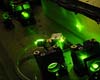 Columbia MO (SPX) Mar 14, 2008
Many people equate lasers with a sci-fi battle in a galaxy far, far away or, closer to home, with grocery store scanners and compact disc players. However, an ultra-fast, ultra-intense laser, or UUL, with laser pulse durations of one quadrillionth of a second, otherwise known as one femtosecond, could change cancer treatments, dentistry procedures, precision metal cutting, and joint implant surgeries. |
|
|

| The content herein, unless otherwise known to be public domain, are Copyright 1995-2007 - SpaceDaily.AFP and UPI Wire Stories are copyright Agence France-Presse and United Press International. ESA Portal Reports are copyright European Space Agency. All NASA sourced material is public domain. Additional copyrights may apply in whole or part to other bona fide parties. Advertising does not imply endorsement,agreement or approval of any opinions, statements or information provided by SpaceDaily on any Web page published or hosted by SpaceDaily. Privacy Statement |