
 |
 |
 |
 |
 |
 |
 |
 |
 |

 |

Paris, France (ESA) Sep 08, 2010 This month the International Astronautical Congress will be held in Prague for the first time in 33 years. The global event highlights the growing activities in space industry, science and education in the Czech Republic - ESA's newest Member State. The 61st International Astronautical Congress (IAC) will take place in Prague from 27 September to 1 October. The annual congress encourages the advancement of space knowledge and enables the global space community to share its experience and deepen worldwide cooperation. The event spotlights the long space research and development history and ambitions of the Czech Republic, which joined ESA in 2008. The Czech Space Office (CSO) was established in 2003, when the country became one of the first to join ESA's Plan for European Cooperating States (PECS). The CSO is responsible for ensuring that Czech investments in space provide maximum benefits. "Our primary goal is to increase the participation of Czech organisations in international space projects; we also foster educational opportunities for youth," says Dr Jan Kolar, Head of the CSO and local organiser of this year's IAC event.
Czech space science: decades of development "The first wholly developed Czechoslovak satellite, Magion-1, flew in 1978. With our involvement in former Soviet missions to Mars and Phobos, several dozen Czech devices and systems had flown in space by the end of the 1980s," says Dr Kolar. In the 1990s, despite massive national change, four more Magion satellites were flown, strengthening the Czech Republic's expertise in magnetospheric and ionospheric science. In 2003, the country orbited Mimosa, which carried a micro-accelerometer. Today, the main areas for Czech space science include the Sun, space weather and processes in Earth's ionosphere and magnetosphere. Czech experiments that observe plasma and wave phenomena are orbiting on ESA's Proba-2 satellite and a Czech coronagraph is proposed for Proba-3. Czech physicists are also involved in the development of a new generation of atomic clocks to be tested on the International Space Station, while the upcoming Solar Orbiter would have participation from Czech scientists for three of its instruments.
Supporting youth and education "The 'Space Generation Congress' will be held a week prior to the main IAC. There are also education workshops for teachers, a university forum and a workshop for student Cubesat developers." "We aim to show the world Czech space competence and help our young people make a positive contribution to Europe in space."
Share This Article With Planet Earth
Related Links IAC 2010 The latest information about the Commercial Satellite Industry

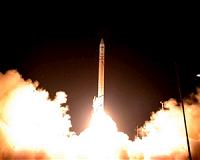 Kick-Starting Israel's Place In Space
Tel Aviv, Israel (SPX) Sep 07, 2010 With a promised $80 million cash injection every year for the next five years, its lucrative defense and communications industries as a solid base, and a new satellite research accord with NASA, Israel is looking to space as its newest high-tech business frontier. Capitalizing on its defense, communications and IT industry, Israel plans on kick starting a potential $10-billion-a-year busin ... read more |
|
|
| The content herein, unless otherwise known to be public domain, are Copyright 1995-2010 - SpaceDaily. AFP and UPI Wire Stories are copyright Agence France-Presse and United Press International. ESA Portal Reports are copyright European Space Agency. All NASA sourced material is public domain. Additional copyrights may apply in whole or part to other bona fide parties. Advertising does not imply endorsement,agreement or approval of any opinions, statements or information provided by SpaceDaily on any Web page published or hosted by SpaceDaily. Privacy Statement |


 del.icio.us
 Digg
Digg Reddit
 YahooMyWeb
 Google
 Facebook


