
 |
 |
 |
 |
 |
 |
 |
 |
 |

 |

Jeddah, Saudi Arabia (AFP) Oct 28, 2010 Canadian Dr. Kamran Khan looks at a digitised 3-D map of the world at the time of the World Cup last June showing the origins and number of air passengers flying into South Africa that month. It also shows disease outbreaks in those departure locales at exactly the same time: London, England, 29,454 passengers, mumps; Dakar, Senegal, 3,777 passengers, tuberculosis; Singapore, 5,331 passengers, foot and mouth disease. The tool, a product of Khan's Bio.Diaspora project, seems obvious: putting together passenger data and health data to prepare for health emergencies in gatherings of hundreds of thousands or millions of people. But until recently, precise airline data could not be collated with disease outbreak information for planners of mass gatherings. At a three-day symposium on medicine and mass gatherings in the Saudi city of Jeddah this week, sponsored by British medical journal The Lancet, Khan's project got lots of attention from professionals who have run everything from music festivals to the Olympics to the biggest annual gathering of all, the hajj pilgrimage, which brings more than two million Muslims to nearby Mecca. Mass gatherings -- defined as any large event with the potential to overwhelm local health service capabilities -- pose particularly complex security and health challenges, said Brian McCloskey, who is the leader in health planning for the 2012 London Olympics. "Small things become big things quickly... We have to respond to things at a much lower threshold," he said. The hajj has long experienced health emergencies, from stampedes to outbreaks of meningitis. The pace of the ritual requirements of the four-day event, a once-in-a-lifetime duty for many Mulsims, raises the risks. "The majority of pilgrims are older, which increases the complications," said Ziad al-Memish, assistant deputy minister at the Saudi health ministry, which co-sponsored the conference. Last year, the threat of the newly-surfaced H1N1 swine flu sparked a global mobilisation to limit outbreaks during the pilgrimage and prevent it from accelerating the disease's spread worldwide. In the end, the flu blew itself out, with the help of vaccinations, monitoring and a less potent than expected virus. Less than 130 infections were detected during the event and only five pilgrims died. But it demonstrated the need to have detailed data on the origins and destinations of people attending the hajj and other such events. Working together with HealthMap, a well-established online disease early-alert system, Toronto-based Bio.diaspora aims to understand the air transport system as a conduit for disease. "In the span of just a few weeks, it can disseminate the diseases to places they didn't exist," said Khan. "We are for the first time putting the two pieces together... We actually can potentially confront infectious disease threats globally before they find their way into mass gatherings." For events like the hajj, the researchers behind the Bio.diaspora project at St. Michael's Hospital in Toronto are aiming to collate traveller origin and disease locations down to the district level. For instance, Khan says, for the hajj they would know better to focus on a disease outbreak in Indonesia if it was in predominantly Muslim East Java than if it was from largely Christian Irian Jaya. "We just want to prioritise where we put our energy," he said. Mass gatherings are not only to be watched to defend against outbreaks; the hajj, for one, has been used as a way to advance protective vaccinations. Saudi authorities for years have required vaccinations for diseases such as polio and meningitis from visitors, giving other governments the impetus to institute such programmes, said David Heymann, head of the Centre on Global Health Security at Chatham House in Britain. The hajj has been "a very important contribution to the world eradication of polio," he said. Another tool for mass event health managers is social media, said White House national security staff member Dr. David Marcozzi, who oversaw health issues for Barack Obama's presidential inauguration in January 2009. His group monitored Twitter and other online media to keep up with how the two-million strong crowd coped with the sub-freezing temperatures, at the height of the flu season. The new media allowed them to spot potential problems by location in the huge crowd in downtown Washington DC. "We were monitoring the population on what were their concerns and challenges," he said.
Share This Article With Planet Earth
Related Links Hospital and Medical News at InternDaily.com

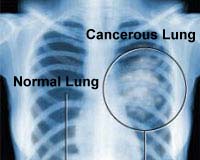 Cheek Swab May Detect Lung Cancer
Arlington, VA (SPX) Oct 13, 2010 Early detection is critical for improving cancer survival rates. Yet, one of the deadliest cancers in the United States, lung cancer, is notoriously difficult to detect in its early stages. Now, researchers have developed a method to detect lung cancer by merely shining diffuse light on cells swabbed from patients' cheeks. In a new clinical study, the analysis technique--called parti ... read more |
|
|
| The content herein, unless otherwise known to be public domain, are Copyright 1995-2010 - SpaceDaily. AFP and UPI Wire Stories are copyright Agence France-Presse and United Press International. ESA Portal Reports are copyright European Space Agency. All NASA sourced material is public domain. Additional copyrights may apply in whole or part to other bona fide parties. Advertising does not imply endorsement,agreement or approval of any opinions, statements or information provided by SpaceDaily on any Web page published or hosted by SpaceDaily. Privacy Statement |


 del.icio.us
 Digg
Digg Reddit
 YahooMyWeb
 Google
 Facebook


