
 |
 |
 |
 |
 |
 |
 |
 |
 |

 |

Paris, France (ESA) Mar 08, 2011 A key technical challenge of the joint ESA-NASA LISA mission has been solved: how to maintain precise pointing of a laser beam across five million km of space. The next-decade Laser Interferometer Space Antenna (LISA) mission will look for ripples in spacetime - their existence predicted by Albert Einstein - known as gravitational waves. A trio of identical spacecraft will fly five million km apart in an equilateral triangle formation, linked by laser beams. A precision-measuring method called interferometry can combine these laser beams to identify the slightest movement between free-floating metallic cubes within each spacecraft. Motion within a set frequency range will be scrutinised to search out gravitational waves emitted by massive black holes and similarly energetic cosmic objects. "Our research set out to solve one of LISA's most challenging elements," said Lucio Scolamiero, overseeing some of the LISA technology studies for ESA. "How do we maintain the optical pathways between the spacecraft and therefore the measurement chain between them?" Owing to the finite speed of light, it will take 16 seconds for each laser beam to cover the five million km to its receiving spacecraft. LISA must steer the laser beam to compensate for the orbital movement of each spacecraft during this time. In the process, the steering mirror has to remain stable down to the subatomic scale: any motion would be misinterpreted as a gravitational wave. "That this could be achieved at all was by no means certain: to begin with, we didn't even have available means to measure the performance of such a system," Lucio added. "But we received two promising proposals and decided to pursue both of them." The two designs were developed independently by separate industrial groups: TNO in the Netherlands and RUAG and CSEM in Switzerland. "ESA doesn't duplicate technology development but does sometimes pursue complementary approaches," Lucio explained. "If one proves inadequate then we have another as backup." The two palm-sized designs share some elements. Both use capacitance-based sensors to measure mirror angle errors needing correction. Electrodes are spaced a very short distance apart; any shift in this distance causes a change in the electric charge running between them. The motor to make the adjustment is based on piezoelectric ceramics similar to those found in quartz watches, which convert electric signals into movement. These ceramics are sliced up for precision performance. TNO's design uses 'piezo-stacks' while RUAG-CSEM's employs a 'piezo-leg' reproducing 'walking' motion. To steer the mirror, both approaches reject ball-bearing components in favour of 'flexural hinges'. Metallic blades around 0.1 mm thick are carefully shaped using a precision manufacturing technique. The Albert Einstein Institute in Hannover, Germany, developed an ultra-stable measuring system to validate device performance. They used laser-based interferometry - the same technique LISA will rely on - with the experiment performed inside a vacuum chamber and mounted on a bench of ZERODUR glass, all-but immune to temperature-driven distortion. "Both developments are fully compliant to our extreme performance requirements," Lucio concluded. A decision on which version to fly will be taken later during LISA's implementation phase. A single-satellite precursor, LISA Pathfinder, will be launched in 2013 to flight-validate key technologies for the full LISA mission, a large-mission candidate in ESA's Cosmic Vision programme.
Share This Article With Planet Earth
Related Links Albert Einstein Institute Space Technology News - Applications and Research

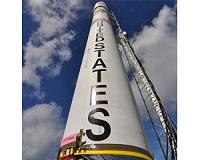 NASA Creates Glory Satellite Mishap Investigation Board
Washington DC (SPX) Mar 07, 2011 NASA's Glory mission ended Friday after the spacecraft failed to reach orbit following its launch from Vandenberg Air Force Base in California. NASA has begun the process of creating a Mishap Investigation Board to evaluate the cause of the failure. Telemetry indicated the fairing, a protective shell atop the satellite's Taurus XL rocket, did not separate as expected. The launch proc ... read more |
|
|
| The content herein, unless otherwise known to be public domain, are Copyright 1995-2010 - SpaceDaily. AFP and UPI Wire Stories are copyright Agence France-Presse and United Press International. ESA Portal Reports are copyright European Space Agency. All NASA sourced material is public domain. Additional copyrights may apply in whole or part to other bona fide parties. Advertising does not imply endorsement,agreement or approval of any opinions, statements or information provided by SpaceDaily on any Web page published or hosted by SpaceDaily. Privacy Statement |


 del.icio.us
 Digg
Digg Reddit
 YahooMyWeb
 Google
 Facebook


