
 |
 |
 |
 |
 |
 |
 |
 |
 |

 |

Munich, Germany (SPX) Jan 04, 2011 Everyone has heard that carbon dioxide is responsible for global warming. But the gas also has some positive characteristics. Researchers are now impregnating plastics with compressed CO2 in a process that could lead to new applications ranging from colored contact lenses to bacteria-resistant door handles. CO2 is more than just a waste product. In fact, it has a variety of uses: the chemical industry makes use of this colorless gas to produce urea, methanol and salicylic acid. Urea is a fertilizer, methanol is a fuel additive, and salicylic acid is an ingredient in aspirin. Researchers at the Fraunhofer Institute for Environmental, Safety and Energy Technology UMSICHT in Oberhausen are pursuing a new idea by testing how carbon dioxide can be used to impregnate plastics. At a temperature of 30.1 degrees Celsius and a pressure of 73.8 bar, CO2 goes into a supercritical state that gives the gas solvent-like properties. In this state, it can be introduced into polymers, or act as a "carrier" in which dyes, additives, medical compounds and other substances can be dissolved. "We pump liquid carbon dioxide into a high-pressure container with the plastic components that are to be impregnated, then steadily increase the temperature and the pressure until the gas reaches the supercritical state. When that state is reached, we increase the pressure further. "At 170 bar, pigment in powder form dissolves completely in the CO2 and then diffuses with the gas into the plastic. The whole process only takes a few minutes. When the container is opened, the gas escapes through the surface of the polymer but the pigment stays behind and cannot subsequently be wiped off," explains Dipl.-Ing. Manfred Renner, a scientist at Fraunhofer UMSICHT. In tests, the researchers have even managed to impregnate polycarbonate with nanoparticles that give it antibacterial properties. E-coli bacteria, placed on the plastic's surface in the institute's own high-pressure laboratory, were killed off completely - a useful function that could be applied to door handles impregnated with the same nanoparticles. Tests conducted with silica and with the anti-inflammatory active pharmaceutical ingredient flurbiprofen were also successful. "Our process is suitable for impregnating partially crystalline and amorphous polymers such as nylon, TPE, TPU, PP and polycarbonate," states Renner, "but it cannot be applied to crystalline polymers." The process holds enormous potential, as carbon dioxide is non-flammable, non-toxic and inexpensive. Whilst it shows solvent-like properties, it does not have the same harmful effects on health and on the environment as the solvents that are used in paints, for example. Painted surfaces are also easily damaged and are not scratch-resistant. Conventional processes for impregnating plastics and giving them new functions have numerous drawbacks. Injection molding, for instance, does not permit the introduction of heat-sensitive substances such as fire retardants or UV stabilizers. Many dyes change color; purple turns black. "Our method allows us to customize high-value plastic components and lifestyle products such as mobile phone shells. The best about it is that the color, additive or active ingredient is introduced into layers near the surface at temperatures far below the material's melting point, in an environ mentally friendly manner that does away with the need for aggressive solvents ," says Renner. The process could, for example, be used to dye contact lenses - and lenses could even be enriched with pharmaceutical compounds that would then be slowly released to the eye throughout the day, representing an alternative to repeated applications of eye drops for the treatment of glaucoma. According to the scientist, this new impregnation method is suitable for a broad range of new applications.
Share This Article With Planet Earth
Related Links Research News January 2011 - PDF 369KB Space Technology News - Applications and Research

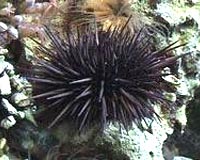 Ever-Sharp Urchin Teeth May Yield Tools That Never Need Honing
Madison WI (SPX) Dec 29, 2010 To survive in a tumultuous environment, sea urchins literally eat through stone, using their teeth to carve out nooks where the spiny creatures hide from predators and protect themselves from the crashing surf on the rocky shores and tide pools where they live. The rock-boring behavior is astonishing, scientists agree, but what is truly remarkable is that, despite constant grinding and scr ... read more |
|
|
| The content herein, unless otherwise known to be public domain, are Copyright 1995-2010 - SpaceDaily. AFP and UPI Wire Stories are copyright Agence France-Presse and United Press International. ESA Portal Reports are copyright European Space Agency. All NASA sourced material is public domain. Additional copyrights may apply in whole or part to other bona fide parties. Advertising does not imply endorsement,agreement or approval of any opinions, statements or information provided by SpaceDaily on any Web page published or hosted by SpaceDaily. Privacy Statement |


 del.icio.us
 Digg
Digg Reddit
 YahooMyWeb
 Google
 Facebook


