
 |
 |
 |
 |
 |
 |
 |
 |
 |

 |

Honolulu HI (SPX) Jul 30, 2010 The University of Hawaii at Manoa's School of Ocean Earth Science and Technology (SOEST) completed a three-year long investigation of Sea Disposal Site Hawaii Number 5 (HI-05), a deep-water military munitions disposal site in U.S. coastal waters approximately 5 miles south of Pearl Harbor, Oahu, Hawaii. This complex investigation required the use of high-resolution sidescan sonar and remotely operated underwater vehicles to locate sea disposed munitions in water as deep as 1,500 feet. The SOEST's Hawaii Undersea Research Laboratory's (HURL) two three-man PISCES research submersibles were deployed to validate the results of sonar data and take water and sediment samples in areas where military munitions were found. "We know from archived records thousands of military munitions were sea disposed at HI-05. There were also some indications that as many as 16,000 M47 100-pound bombs containing approximately 73 pounds each of the chemical agent mustard were disposed in the area," said Dr. Margo Edwards. "The systematic approach that we developed in collaboration with personnel from the U.S. Army and private industry (Environet, Inc.) allowed us to identify more than 2,000 munitions on the seafloor in the study area. With assistance from the HURL, samples collected within a few feet of several munitions provided the study team the ability to assess the potential impact of sea disposed munitions on human health and the ocean environment, as well as to assess the impact of the ocean environment on sea disposed munitions." Sediment, water and biological samples were analyzed at the University of Hawaii and independent laboratories on the mainland for munitions constituents, including explosive compounds like TNT, chemical agents and their breakdown products, and metals. The HI-05 project report has six major conclusions, which may be summarized as: + Most munitions in the HI-05 Study Area were disposed of by ships that were underway as munitions were cast overboard. + The integrity of munitions in the area spans a broad spectrum, with even the best-preserved munitions casings deteriorating at a yet-to-be determined rate. Skirts and pedestals observed at the base of munitions may be the result of rusting, possibly in combination with leakage of munitions constituents. + The analytical methods used to detect munitions constituents during the program were effective. With the exception of one unconfirmed detection of mustard, neither chemical agents nor explosives were detected in any samples. + Analysis of sediment samples collected around several munitions showed relatively little influence from human activities or man-made objects. This is significant given that the samples were taken within six feet of the munitions. + The observations and data collected do not indicate any adverse impacts on ecological health in the HI-05 Study Area. + The risk to human health from the consumption of fish and shrimp collected near the HI-05 Study Area were within Environmental Protection Agency acceptable risk levels. Mr. Tad Davis, Deputy Assistant Secretary of the Army for Environment, Safety and Occupational Health stated, "University of Hawaii at Manoa's School of Ocean Earth Science and Technology (SOEST) and the quality team it assembled exceeded our expectations performing an extremely complex study with scientific rigor. By providing the Army with demonstrated, proven procedures for characterizing and assessing a munitions disposal site, SOEST has made a significant contribution to the Department of Defense's understanding of the potential effects of historic sea disposal sites on the ocean environment and those that use it." The University of Hawaii undertook this project in partnership with Department of Defense's National Defense Center for Energy and the Environment. The National Oceanic and Atmospheric Administration and Environet, a local environmental engineering firm, consulted with the University of Hawaii on the project. The U.S. Army's Edgewood Chemical Biological Center provided chemical safety and analytical support for the project.
Share This Article With Planet Earth
Related Links University of Hawaii at Manoa The latest in Military Technology for the 21st century at SpaceWar.com

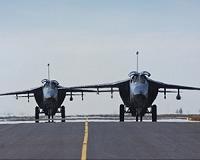 Last Major Exercise For Australia's F-111s
Canberra, Australia (SPX) Jul 29, 2010 As the end of the F-111 era draws to a close the long-range strike aircraft are still flexing their muscle as they take part in their final Exercise Pitch Black. Four F-111s from No. 6 Squadron RAAF Amberley, Qld are taking part in the exercise which commenced on 16 July. After 37 years, the iconic F-111s are the longest current serving aircraft in the Royal Australian Air Force's fl ... read more |
|
|
| The content herein, unless otherwise known to be public domain, are Copyright 1995-2010 - SpaceDaily. AFP and UPI Wire Stories are copyright Agence France-Presse and United Press International. ESA Portal Reports are copyright European Space Agency. All NASA sourced material is public domain. Additional copyrights may apply in whole or part to other bona fide parties. Advertising does not imply endorsement,agreement or approval of any opinions, statements or information provided by SpaceDaily on any Web page published or hosted by SpaceDaily. Privacy Statement |


 del.icio.us
 Digg
Digg Reddit
 YahooMyWeb
 Google
 Facebook


