
 |
 |
 |
 |
 |
 |
 |
 |
 |

 |

Tehran (UPI) Jul 27, 2010 Iran says it has launched a program to develop a nuclear fusion reactor, an ambition deemed unrealistic by Western analysts. Officials from the Islamic Republic this past weekend unveiled the program, which will have a budget of $8 million, the BBC reports. The powerful nuclear fusion process is used to make hydrogen bombs but has never been successfully harnessed for commercial-scale power generation. At a ceremony to mark the beginning of the project, the head of the fusion research institute, Asghar Sediqzadeh said 50 scientists would be working on the project. Initial studies will last for two years, with construction of a test reactor taking another 10 years, Sediqzadeh said. "Iran is one of the first countries to begin research in this field," he was quoted as saying by the BBC. "We built one installation about 30 years ago. We had some delays in the past 10 years (but) we can quickly make up for this time." Ali Akbar Salehi, the head of the Atomic Energy Organization of Iran, said his country had launched a serious bid into fusion energy, a technology long sought after by the West. "It takes 20 to 30 years before this process can be commercialized but we have to use all the capacity in the country to provide the necessary speed for fusion research," Iranian news agency ISNA quoted Salehi as saying. International observers are less optimistic. "If the Iranians had this wonderful technological edge over the rest of the world, and they were about to produce a nuclear reactor that does fusion in a commercially viable fashion, bless them," Emanuele Ottolenghi, an expert on Iran's nuclear program with the Foundation for the Defense of Democracies told Voice of America. "But the fact that nobody else has done it so far suggests that maybe the Iranians are up to just playful banter." Ottolenghi suggested the program might not serve energy but military purposes. "If one looks at what the reality of a military program is, if you want to have thermonuclear weapons, you need to master the technology for fusion," he said. "And while fusion is not commercially viable for civilian purposes, fusion allows you to build infinitely more powerful nuclear weapons." Observers hope that nuclear fusion can one day produce CO2-free base-load power on a large scale. Fusion plants would fuse together atoms inside a reactor to produce electricity. Conventional nuclear power reactors do the opposite, harnessing energy released from splitting atoms. Once the technical challenges -- and there are many -- are overcome, fusion power has potential advantages including the existence of abundant fuel, a relatively safe energy generation producing only low-level waste and no greenhouse gases. Yet scientists haven't yet found a way to build a reactor that produces more energy than it consumes. An international scheme to build a nuclear fusion reactor in France has come under fire for ballooning costs. Costs for the ITER test reactor project, led by a consortium including the European Union, China Japan, Russia, India and the United States, have soared from $7 billion to around $18 billion.
Share This Article With Planet Earth
Related Links Powering The World in the 21st Century at Energy-Daily.com

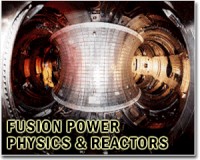 Nuclear experts seek to advance fusion project
Marseille, France (AFP) July 26, 2010 An explosion in costs has cast a cloud over a multi-billion-dollar nuclear fusion project aiming to make the power that fuels the sun a practical energy source on Earth. Delays, rocketing costs and financing problems have hit the International Thermonuclear Experimental Reactor (ITER) whose consortium members start a meeting on Tuesday aiming to get the project back on course. ITER was s ... read more |
|
|
| The content herein, unless otherwise known to be public domain, are Copyright 1995-2010 - SpaceDaily. AFP and UPI Wire Stories are copyright Agence France-Presse and United Press International. ESA Portal Reports are copyright European Space Agency. All NASA sourced material is public domain. Additional copyrights may apply in whole or part to other bona fide parties. Advertising does not imply endorsement,agreement or approval of any opinions, statements or information provided by SpaceDaily on any Web page published or hosted by SpaceDaily. Privacy Statement |


 del.icio.us
 Digg
Digg Reddit
 YahooMyWeb
 Google
 Facebook


