
Energy News
CIVIL NUCLEAR
Japan restarts world's biggest nuclear plant

Japan restarts world's biggest nuclear plant

By Mathias Cena with Kyoko Hasegawa in Tokyo
Kariwa, Japan (AFP) Jan 21, 2026

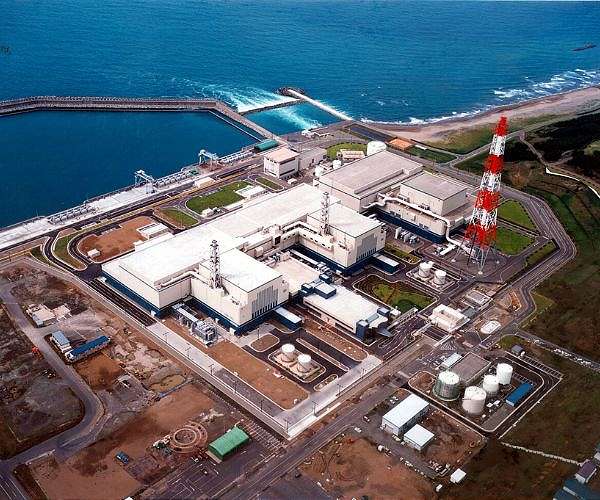
The world's biggest nuclear power plant was restarted Wednesday for the first time since the 2011 Fukushima disaster, its Japanese operator said, despite persistent safety concerns among residents.

The plant was "started at 19:02" (1002 GMT), Tokyo Electric Power Company (TEPCO) spokesman Tatsuya Matoba told AFP of the Kashiwazaki-Kariwa plant in Niigata prefecture.

The regional governor approved the resumption last month, although public opinion remains sharply divided.

On Tuesday, a few dozen protesters -- mostly elderly -- braved freezing temperatures to demonstrate in the snow near the plant's entrance, whose buildings line the Sea of Japan coast.

"It's Tokyo's electricity that is produced in Kashiwazaki, so why should the people here be put at risk? That makes no sense," Yumiko Abe, a 73-year-old resident, told AFP.

Around 60 percent of residents oppose the restart, while 37 percent support it, according to a survey conducted in September.

TEPCO said Wednesday it would "proceed with careful verification of each plant facility's integrity" and address any issues appropriately and transparently.

Kashiwazaki-Kariwa is the world's biggest nuclear power plant by potential capacity, although just one reactor of seven was restarted.

The facility was taken offline when Japan pulled the plug on nuclear power after a colossal earthquake and tsunami sent three reactors at the Fukushima atomic plant into meltdown in 2011.

However, resource-poor Japan now wants to revive atomic energy to reduce its reliance on fossil fuels, achieve carbon neutrality by 2050 and meet growing energy needs from artificial intelligence.

Prime Minister Sanae Takaichi has voiced support for the energy source.

Fourteen reactors, mostly in western and southern Japan, have resumed operation since the post-Fukushima shutdown under strict safety rules, with 13 running as of mid January.

Kashiwazaki-Kariwa is the first TEPCO-run unit to restart since 2011. The company also operates the stricken Fukushima Daiichi plant, now being decommissioned.

Nearly 15 years after the disaster, "the situation is still not under control in Fukushima, and TEPCO wants to revive a plant? For me, that's absolutely unacceptable", said Keisuke Abe, an 81-year-old demonstrator.

- 'Anxious and fearful' -

The vast Kashiwazaki-Kariwa complex has been fitted with a 15-metre-high (50-foot) tsunami wall, elevated emergency power systems and other safety upgrades.

However, residents raised concerns about the risk of a serious accident, citing frequent cover-up scandals, minor accidents and evacuation plans they say are inadequate.

"I think it's impossible to evacuate in an emergency," Chie Takakuwa, a 79-year-old resident of Kariwa, told AFP.

On January 8, seven groups opposing the restart submitted a petition signed by nearly 40,000 people to TEPCO and Japan's Nuclear Regulation Authority.

The petition said the plant sits on an active seismic fault zone and noted it was struck by a strong quake in 2007.

"We can't remove the fear of being hit by another unforeseen earthquake," it said.

"Making many people anxious and fearful so as to send electricity to Tokyo... is intolerable."

Before the 2011 disaster -- which killed around 18,000 people -- nuclear power generated about a third of Japan's electricity.

- String of scandals -

Japan's nuclear industry has also faced a string of scandals and incidents in recent weeks, including data falsification by Chubu Electric Power to underestimate seismic risks.

At Kashiwazaki-Kariwa, TEPCO said Saturday that an alarm system failed during a test.

"Safety is an ongoing process, which means operators involved in nuclear power must never be arrogant or overconfident," TEPCO President Tomoaki Kobayakawa said in an interview with the Asahi daily newspaper.

Japan is the world's fifth-largest single-country emitter of carbon dioxide after China, the United States, India and Russia, and is heavily dependent on imported fossil fuels.

Nearly 70 percent of its electricity in 2023 came from coal, gas and oil -- a share Tokyo wants to slash to 30-40 percent over the next 15 years as it expands renewable energy and nuclear power.

Under a plan approved by the government in February, nuclear power will account for around a fifth of Japan's energy supply by 2040 -- up from around 8.5 percent in the fiscal year 2023-24.

Meanwhile Japan still faces the daunting task of decommissioning the Fukushima plant, a project expected to take decades.

kh-hih/mjw

TEPCO - TOKYO ELECTRIC POWER

CHUBU ELECTRIC POWER

Related Links
Nuclear Power News - Nuclear Science, Nuclear Technology
Powering The World in the 21st Century at Energy-Daily.com

Subscribe Free To Our Daily Newsletters
Tweet

RELATED CONTENT
The following news reports may link to other Space Media Network websites.
CIVIL NUCLEAR
Slovak PM hails nuclear energy deal after Trump meeting
Bratislava (AFP) Jan 18, 2026
Slovakia's Prime Minister Robert Fico on Sunday said he met US President Donald Trump, hailing "exceptionally important" talks for the EU and NATO member's energy security. The meeting comes at a time when Trump has threatened tariffs on goods from several European countries over opposition to his designs on Greenland. Slovakia is not on the list of targeted countries. Fico said the two leaders discussed the war in Ukraine and energy, among other issues, at Trump's Mar-a-Lago residence in Florid ... read more

CIVIL NUCLEAR
Pilot plant in Mannheim delivers tailored climate friendly fuel blends

Garden and farm waste targeted as feedstock for new bioplastics

Beer yeast waste could provide scaffold for cultivated meat production

Biochar layer boosts hydrogen rich gas yields from corn straw

CIVIL NUCLEAR
Self assembling molecule builds better organic solar cell junctions

Hebrew University team develops flexible color tunable solar window technology

Spacer layout boosts performance of single component organic solar cells

Quantum simulator sheds light on how nature moves energy in systems like photosynthesis and solar conversion

CIVIL NUCLEAR
UK nets record offshore wind supply in renewables push

Trump gets wrong country, wrong bird in windmill rant

S.Africa seeks to save birds from wind turbine risks

Vertical wind turbines may soon power UK railways using tunnel airflow

CIVIL NUCLEAR
Understanding ammonia energy's tradeoffs around the world

US to repeal the basis for its climate rules: What to know

Cold winter and AI boom pushed US emissions increase in 2025

France climate goals off track as emissions cuts slow again

CIVIL NUCLEAR
KRISS process enables large-area solid electrolyte fabrication at lower cost

Perovskite betavoltaic cell sets record efficiency using carbon 14 source

Disordered rocksalt roadmap aims to boost lithium ion battery energy and cut critical metals

UK facility scales hydrogen recycling of rare earth magnets

CIVIL NUCLEAR
UK court denies BHP bid to appeal Brazil mine disaster ruling

EU ban on 'forever chemicals' set for delay

Albania's waste-choked rivers worsen deadly floods

Corn cob biochar filters pull ammonia and micro and nanoplastics from water

CIVIL NUCLEAR
Russia says US has not released crew from detained tanker

Oil prices drop 3% after Trump comments on Iran

Chinese villagers struggle for heat as gas subsidies fade

China: the indispensable partner of Maduro's Venezuela

CIVIL NUCLEAR
Ancient deltas reveal vast Martian ocean across northern hemisphere

Tiny Mars' big impact on Earth's climate

The electrifying science behind Martian dust

Sandblasting winds sculpt Mars landscape

Subscribe Free To Our Daily Newsletters


The content herein, unless otherwise known to be public domain, are Copyright 1995-2024 - Space Media Network. All websites are published in Australia and are solely subject to Australian law and governed by Fair Use principals for news reporting and research purposes. AFP, UPI and IANS news wire stories are copyright Agence France-Presse, United Press International and Indo-Asia News Service. ESA news reports are copyright European Space Agency. All NASA sourced material is public domain. Additional copyrights may apply in whole or part to other bona fide parties. All articles labeled "by Staff Writers" include reports supplied to Space Media Network by industry news wires, PR agencies, corporate press officers and the like. Such articles are individually curated and edited by Space Media Network staff on the basis of the report's information value to our industry and professional readership. Advertising does not imply endorsement, agreement or approval of any opinions, statements or information provided by Space Media Network on any Web page published or hosted by Space Media Network. General Data Protection Regulation (GDPR) Statement Our advertisers use various cookies and the like to deliver the best ad banner available at one time. All network advertising suppliers have GDPR policies (Legitimate Interest) that conform with EU regulations for data collection. By using our websites you consent to cookie based advertising. If you do not agree with this then you must stop using the websites from May 25, 2018. Privacy Statement. Additional information can be found here at About Us.