
Energy News
CIVIL NUCLEAR
Japan suspends restart of world's biggest nuclear plant

Japan suspends restart of world's biggest nuclear plant

by AFP Staff Writers
Tokyo (AFP) Jan 22, 2026

The restart of the world's largest nuclear power plant was suspended in Japan on Thursday, with the operator saying it does not know when the problem would be solved.

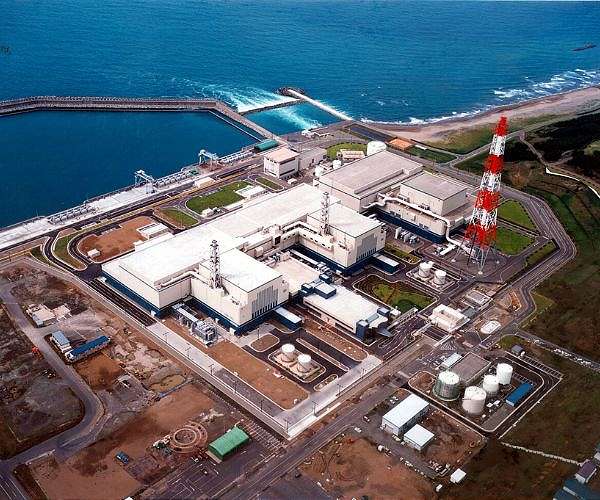
The Kashiwazaki-Kariwa plant in Niigata province had been closed since the 2011 Fukushima disaster, but operations to relaunch it had begun on Wednesday after it received the final green light from the nuclear regulator.

However, its operator the Tokyo Electric Power Company (TEPCO) said Thursday that "an alarm from the monitoring system... sounded during the reactor startup procedures", causing it to suspend operations.

"We don't expect this to be solved within a day or two. There is no telling at the moment how long it will take," site superintendent Takeyuki Inagaki told a news conference.

"We will for now fully focus on trying to identify the cause of what happened," he said.

The alarm that went off prompted TEPCO to "investigate the malfunctioning electrical equipment," spokesman Takashi Kobayashi told AFP.

And "once it became clear that it would take time, we decided to reinsert the control rods in a planned manner", he said, adding that the reactor "is stable and there is no radioactive impact outside".

Control rods are a device used to control the nuclear chain reaction in the reactor core, which can be accelerated by slightly withdrawing them, or slowed down or stopped completely by inserting them deeper.

The restart, initially scheduled for Tuesday, had been pushed back after another technical issue related to the rods' removal was detected last weekend -- a problem that was resolved on Sunday, according to TEPCO.

Kashiwazaki-Kariwa is the world's biggest nuclear power plant by potential capacity, although just one reactor of seven was restarted.

The facility was taken offline when Japan pulled the plug on nuclear power after a colossal earthquake and tsunami sent three reactors at the Fukushima atomic plant into meltdown in 2011.

However, resource-poor Japan now wants to revive atomic energy to reduce its reliance on fossil fuels, achieve carbon neutrality by 2050 and meet growing energy needs from artificial intelligence.

Kashiwazaki-Kariwa is the first TEPCO-run unit to restart since 2011. The company also operates the stricken Fukushima Daiichi plant, now being decommissioned.

Public opinion in Niigata is deeply divided: Around 60 percent of residents oppose the restart, while 37 percent support it, according to a survey conducted in September.

"It's Tokyo's electricity that is produced in Kashiwazaki, so why should the people here be put at risk? That makes no sense," Yumiko Abe, a 73-year-old resident, told AFP this week during a protest in front of the plant.

Earlier this month, seven groups opposing the restart submitted a petition signed by nearly 40,000 people to TEPCO and Japan's Nuclear Regulation Authority, saying that the plant sits on an active seismic fault zone and noted it was struck by a strong quake in 2007.

Related Links
Nuclear Power News - Nuclear Science, Nuclear Technology
Powering The World in the 21st Century at Energy-Daily.com

Subscribe Free To Our Daily Newsletters
Tweet

RELATED CONTENT
The following news reports may link to other Space Media Network websites.
CIVIL NUCLEAR
Slovak PM hails nuclear energy deal after Trump meeting
Bratislava (AFP) Jan 18, 2026
Slovakia's Prime Minister Robert Fico on Sunday said he met US President Donald Trump, hailing "exceptionally important" talks for the EU and NATO member's energy security. The meeting comes at a time when Trump has threatened tariffs on goods from several European countries over opposition to his designs on Greenland. Slovakia is not on the list of targeted countries. Fico said the two leaders discussed the war in Ukraine and energy, among other issues, at Trump's Mar-a-Lago residence in Florid ... read more

CIVIL NUCLEAR
Pilot plant in Mannheim delivers tailored climate friendly fuel blends

Garden and farm waste targeted as feedstock for new bioplastics

Beer yeast waste could provide scaffold for cultivated meat production

Biochar layer boosts hydrogen rich gas yields from corn straw

CIVIL NUCLEAR
Self assembling molecule builds better organic solar cell junctions

Spacer layout boosts performance of single component organic solar cells

Quantum simulator sheds light on how nature moves energy in systems like photosynthesis and solar conversion

Molecular velcro coating boosts perovskite solar cell durability and efficiency

CIVIL NUCLEAR
UK nets record offshore wind supply in renewables push

Trump gets wrong country, wrong bird in windmill rant

CIVIL NUCLEAR
Zelensky seeks more air defence as Russia plunges Kyiv into cold

US to repeal the basis for its climate rules: What to know

Understanding ammonia energy's tradeoffs around the world

Cold winter and AI boom pushed US emissions increase in 2025

CIVIL NUCLEAR
KRISS process enables large-area solid electrolyte fabrication at lower cost

Oak Ridge team plans powerful test facility for next generation fusion components

Low frequency lasers modeled to greatly boost nuclear fusion rates

Disordered rocksalt roadmap aims to boost lithium ion battery energy and cut critical metals

CIVIL NUCLEAR
EU ban on 'forever chemicals' set for delay

Hundreds in London protest against Beijing 'mega embassy'

Albania's waste-choked rivers worsen deadly floods

Corn cob biochar filters pull ammonia and micro and nanoplastics from water

CIVIL NUCLEAR
US firm owned by Trump donor buys German oil storage giant

French navy boards tanker 'from Russia' in Mediterranean

TotalEnergies told to act to 'ease eco-anxiety'

Russia says US has not released crew from detained tanker

CIVIL NUCLEAR
Ancient deltas reveal vast Martian ocean across northern hemisphere

Tiny Mars' big impact on Earth's climate

The electrifying science behind Martian dust

Sandblasting winds sculpt Mars landscape

Subscribe Free To Our Daily Newsletters


The content herein, unless otherwise known to be public domain, are Copyright 1995-2024 - Space Media Network. All websites are published in Australia and are solely subject to Australian law and governed by Fair Use principals for news reporting and research purposes. AFP, UPI and IANS news wire stories are copyright Agence France-Presse, United Press International and Indo-Asia News Service. ESA news reports are copyright European Space Agency. All NASA sourced material is public domain. Additional copyrights may apply in whole or part to other bona fide parties. All articles labeled "by Staff Writers" include reports supplied to Space Media Network by industry news wires, PR agencies, corporate press officers and the like. Such articles are individually curated and edited by Space Media Network staff on the basis of the report's information value to our industry and professional readership. Advertising does not imply endorsement, agreement or approval of any opinions, statements or information provided by Space Media Network on any Web page published or hosted by Space Media Network. General Data Protection Regulation (GDPR) Statement Our advertisers use various cookies and the like to deliver the best ad banner available at one time. All network advertising suppliers have GDPR policies (Legitimate Interest) that conform with EU regulations for data collection. By using our websites you consent to cookie based advertising. If you do not agree with this then you must stop using the websites from May 25, 2018. Privacy Statement. Additional information can be found here at About Us.