
 |
 |
 |
 |
 |
 |
 |
 |
 |

 |

Paris, France (ESA) Mar 02, 2011 After a flawless launch last Thursday and a textbook docking on Saturday, the Space Shuttle has delivered the European-built Leonardo Permanent Multipurpose Module to the International Space Station. This final flight of Discovery marks the eighth and final trip of Leonardo to the orbiting complex. This visit will be longer: the module will be left attached to the Station as a permanent extension. Originally built to ferry cargo to and from the Station in the Shuttle cargo bay, Leonardo's modifications include improved debris shielding and easier access by the crew to its internal equipment. Leonardo flew into space for the first time in 2001, also on Discovery, as the first of three Multipurpose Logistics Modules built by the Italian space agency, ASI, under an agreement with NASA. Its final cargo for the Station includes an experiment rack and a range of stowage facilities. Leonardo can also support microgravity research into fluid physics, materials science, biology and biotechnology. Leonardo was removed from the Shuttle's cargo bay using the Station's robotic arm and mated to the Earth-facing port of the Unity node. Attachment was called complete at 16:05 CET. Discovery is scheduled to return to Earth on 8 March.
Share This Article With Planet Earth
Related Links Life in Space at ESA Station at NASA Station and More at Roscosmos S.P. Korolev RSC Energia Watch NASA TV via Space.TV Space Station News at Space-Travel.Com

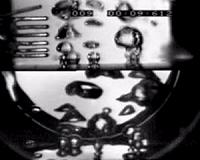 Boiling Bubbles Are Cool In Space
Greenbelt MD (SPX) Mar 01, 2011 It may seem illogical, but boiling is a very efficient way to cool engineering components and systems used in the extreme environments of space. An experiment to gain a basic understanding of this phenomena launched to the International Space Station on space shuttle Discovery Feb. 24. The Nucleate Pool Boiling Experiment, or NPBX, is one of two experiments in the new Boiling eXperiment Fa ... read more |
|
|
| The content herein, unless otherwise known to be public domain, are Copyright 1995-2010 - SpaceDaily. AFP and UPI Wire Stories are copyright Agence France-Presse and United Press International. ESA Portal Reports are copyright European Space Agency. All NASA sourced material is public domain. Additional copyrights may apply in whole or part to other bona fide parties. Advertising does not imply endorsement,agreement or approval of any opinions, statements or information provided by SpaceDaily on any Web page published or hosted by SpaceDaily. Privacy Statement |


 del.icio.us
 Digg
Digg Reddit
 YahooMyWeb
 Google
 Facebook


