
 |
 |
 |
 |
 |
 |
 |
 |
 |

 |

Washington DC (SPX) Sep 23, 2010 They challenge the mountain ranges of the Alps, the Andes and the Himalayas in size yet surprisingly little is known about seamounts, the vast mountains hidden under the world's oceans. Now in a special issue of Marine Ecology scientists uncover the mystery of life on these submerged mountain ranges and reveal why these under studied ecosystems are under threat. The bathymetry of our oceans is now resolved at a scale and detail unimaginable by early pioneers and recent estimates suggest that, globally, there may be up to 100,000 seamounts, yet despite best efforts less than 300 have been well studied. Recognising this scarcity of knowledge provided the motivation CenSeam, a seamount-focused field within the Census of Marine Life which commenced in 2005. "The field of seamount ecology is rife with ecological paradigms, many of which have already become cemented in the scientific literature and in the minds of advocates for seamount protection," said Dr Ashley Rowden, one of the principal investigators of CenSeam. "Together, these paradigms have created a widely held view of seamounts as unique environments, hotspots of biodiversity with fragile ecosystems of exceptional ecological worth." The special issue puts major paradigms in seamount ecology under the microscope to assess their status against the weight of existing evidence to date, and against the backdrop of the latest findings. Researchers challenged the theory that seamounts act as hotspots of species richness, the weight of evidence now suggests that seamounts may have comparable levels of diversity and endemism to continental margins. However, it appears that their ecological communities are distinct in structure, and of higher biomass than neighbouring continental margins. The geographical differences between seamount communities have suggested limited larval dispersal, local speciation, geographic isolation, or a combination of all these processes. New genetic research presented in the special issue addresses these themes, documenting complex patterns of connectivity among species populations that depend on spatial scale, physical barriers, and life history characteristics. Much seamount research has been born out of the need to better manage these potentially vulnerable ecosystems. Globally, seamount ecosystems are under pressure from bottom-contact fishing and other human-related impacts. Researchers detail the footprint of trawling and a risk assessment confirms what has long been suspected: seamount communities are highly vulnerable to disturbance by bottom trawling and recovery from fishing impacts is a lengthy process, likely requiring decades at a minimum. A predicted shallowing of the aragonite saturation horizon caused by ocean acidification is expected to place deepwater corals at risk, but researchers pose that the summits and upper flanks of seamounts may yet provide a spatial refuge from these impacts. "It is hoped" says Thomas Schlacher, lead editor of the volume "that the papers in this special issue will challenge some of the previously held concepts about seamount ecosystems, and hopefully stimulate and help guide future research endeavours both on seamounts, and across the wider deep-sea realm."
Share This Article With Planet Earth
Related Links Census of Marine Life Water News - Science, Technology and Politics

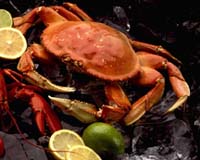 China, Japan, US top list of world seafood consumers: study
Washington (AFP) Sept 22, 2010 China is the world's top seafood consumer, followed by Japan and the United States, a trio leading an "unsustainable" assault on global fish stocks, according to a new study which measures the impact of fishing practices. The study, written up in October's National Geographic magazine, found that China's enormous population gives it the world's biggest "seafood print" - 694 million metric t ... read more |
|
|
| The content herein, unless otherwise known to be public domain, are Copyright 1995-2010 - SpaceDaily. AFP and UPI Wire Stories are copyright Agence France-Presse and United Press International. ESA Portal Reports are copyright European Space Agency. All NASA sourced material is public domain. Additional copyrights may apply in whole or part to other bona fide parties. Advertising does not imply endorsement,agreement or approval of any opinions, statements or information provided by SpaceDaily on any Web page published or hosted by SpaceDaily. Privacy Statement |


 del.icio.us
 Digg
Digg Reddit
 YahooMyWeb
 Google
 Facebook


