
 |
 |
 |
 |
 |
 |
 |
 |
 |

 |

London, UK (SPX) Aug 17, 2010 From 14 - 25 August 2010, scientists from around the world will gather in Southern Turkey to measure the spectral reflectance of a few square kilometres of salt. These measurements will have a major impact on the future of satellite based Earth observation, and will ultimately improve our understanding of the Earth's climate. For ten months of the year Tuz Golu (Lake Tuz) in southern Turkey appears to be like any other lake. However, during July and August it dries to become a bright, pristine, white surface, which is ideal for calibrating Earth observation satellites. Tuz Golu is one of eight sites recently endorsed by the Committee on Earth Observation Satellites (CEOS) to become an international reference standard to evaluate satellites' sensor-to-sensor biases, and also to calibrate/validate their radiometric performance.
Observing the dynamic Earth Equally, routine measurements for agriculture, resource and disaster monitoring rely on linking data from different satellites to ensure continuous time coverage, seeking to realise the vision of a Global Earth Observing System of Systems - GEOSS. For the CEOS reference standards sites to be of use, their radiometric characteristics (as measured by ground teams) must be consistently evaluated and, of course, traceable to SI Units. The National Physical Laboratory (NPL), with funding from both the European Space Agency and the National Measurement Office, has led international efforts to achieve this. In 2009, NPL organised a pilot comparison for a few European experts, and 2010 sees experts from North and South America, Africa, Asia, as well as Europe taking part.
From standards lab to salt lake In addition to being the pilot for this comparison, NPL will also use its Gonio- Radiometric Spectrometer System (GRASS) to make measurements of the salt lake's surface reflectance from many different angles. This will allow corrections to be applied for satellites that cannot view Tuz Golu from directly overhead. Whilst the scientists make ground-based measurements at Tuz Golu, a range of satellites will simultaneously measure the same site. This allows the satellites' performances to be evaluated. This comparison marks the first step towards establishing an operational calibration service for Earth observation sensors. The long-term goal is to automate and link the measurements of the eight reference sites as a network (LandNET), and then to tailor signals to match the different response and geometric conditions of different sensors. Ultimately, the site's characteristics will be calibrated from orbit using an in-flight standard sensor, such as the NPL TRUTHS mission for example.
Share This Article With Planet Earth
Related Links National Physical Laboratory Earth Observation News - Suppiliers, Technology and Application

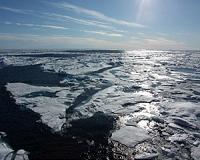 Russia Proposes Launch Of Arktika Space Monitoring Project In 2014
Moscow, Russia (RIA Novosti) Aug 17, 2010 The Russian Economic Development Ministry has proposed launching the Arktika (Arctic) satellite system from 2014, the head of the Federal Space Agency (Roscosmos) said on Monday. The system, which is worth around 70 billion rubles ($2.5 billion), will monitor climatic changes and survey energy resources in the Arctic region. "We developed a system that consists of three subsystems, and sub ... read more |
|
|
| The content herein, unless otherwise known to be public domain, are Copyright 1995-2010 - SpaceDaily. AFP and UPI Wire Stories are copyright Agence France-Presse and United Press International. ESA Portal Reports are copyright European Space Agency. All NASA sourced material is public domain. Additional copyrights may apply in whole or part to other bona fide parties. Advertising does not imply endorsement,agreement or approval of any opinions, statements or information provided by SpaceDaily on any Web page published or hosted by SpaceDaily. Privacy Statement |


 del.icio.us
 Digg
Digg Reddit
 YahooMyWeb
 Google
 Facebook


