
 |
 |
 |
 |
 |
 |
 |
 |
 |

 |

Mae Sot, Thailand (AFP) July 12, 2010 The spiky-haired teenager said he clearly recalls the day when Myanmar state troops whisked him from the streets of Mandalay, accused him of stealing and forced him to become a child soldier. "They said if you don't want to go to jail, you must join the army. I said I didn't want to join but whenever I said it they beat me again and again. When I agreed to join they stopped beating me," Win Sein told AFP. He said he was homeless and aged about 15 -- although he doesn't know his birthday -- when he was recruited less than two years ago, joining thousands of under-18s believed to be in Myanmar's state army and ethnic armed groups. After four months of boot camp, involving a gruelling fitness regime, weapons training and corporal punishment, the youngster said he was sent to the frontline of civil war against ethnic rebels in remote jungle regions. A year later, Win Sein fled his post and eventually escaped from the military-ruled country, arriving in the Thai border town Mae Sot in March. "The main reason was not the fighting, but because the sergeants were really, really brutal. They always insulted and beat the child soldiers," he said. "So I decided to run away, whatever happened to me." While it is difficult to verify former child soldiers' backgrounds, Myanmar analyst David Mathieson of Human Rights Watch said Win Sein's story was "sadly typical, in terms of training times, locations and the workload". Win Sein, whose name AFP has changed to protect him and his family, is now in the care of Mae Sot-based aid group Social Action for Women (SAW), where he was initially reluctant to discuss his harrowing experience. "After he arrived, he would lose control. He broke bottles and used the glass to cut his arm," said SAW's director Aye Aye Mar. "He didn't talk. He didn't answer any questions we asked. He didn't trust anyone." Such psychological damage is typical in youngsters who have spent time in the army, added the director, who has looked after around 20 former child soldiers from Myanmar. Win Sein said the children at his boot camp were forced to tell the lieutenant they had signed up voluntarily, and "because they were afraid of the sergeants who recruited them, they lied about their age". Such underage enlistment, which is banned by law in Myanmar, is a result of regimental efforts to keep numbers up in the vast army rather than a central junta directive, according to Mathieson of Human Rights Watch. "It's basically free market recruitment," he said. "It's certainly not official -- there's no paper trail saying it's coming from the war office in (the capital city) Naypyidaw." Mathieson said there are likely to be thousands of child soldiers in the state military, which is thought to be up to 400,000 strong. And the problem is not confined to the official force in Myanmar, a nation ruled by the military since 1962 and embroiled in civil war in ethnic minority areas since gaining independence in 1948. A United Nations report released in May named nine of the country's ethnic armed groups, as well as the government army, for recruiting and using children in conflict, noting "extremely limited access" to monitor such forces. Win Sein, who before his recruitment had run away from home to escape abuse by his step-father, said street children were a particularly easy target for state troops who get paid or rewarded for filling military personnel quotas. He said he met numerous fellow child soldiers with a similarly penurious background to his own. "Soldiers dressed in plain clothes go to children who live on the street and say, 'Hey little brother, do you want a snack? I will get you one'. "These street children are hungry and have no food, so they are happy someone is buying something for them and they follow the men," Win Sein said. Steve Marshall, the International Labour Organisation (ILO) liaison officer in Myanmar, agreed the children preyed upon "tend to be those in a vulnerable situation", such as boys on their own at railway stations and markets. He said the youngest boy known to be signed up was aged just 11. With the junta's agreement, the ILO has a process for families to complain about underage recruitment cases, which if verified are submitted to the government to get the children released and their recruiters disciplined. Since 2007 more than 100 victims have been discharged and numerous army personnel reprimanded for their part in such cases, including three who were jailed, and there has been training by the military to raise awareness of recruitment law. But "there is no firm evidence suggesting that the situation has markedly improved," Marshall said. The youngsters roped into battle can face destroyed childhoods, uncertain futures and -- for deserters such as Win Sein -- a lingering fear of retribution. "I would like to see my mother and sister again but I dare not contact them because I don't want to get them in trouble," he said. "I also don't want them to know what I have been through."
Share This Article With Planet Earth
Related Links The Long War - Doctrine and Application

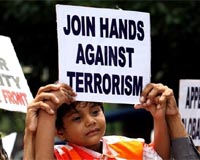 More Terror Groups Globally, But Fewer Coordinated Attacks
College Park MD (SPX) Jul 09, 2010 The deadly, coordinated terror strikes in London five years ago - the 7/7 transit attacks - reflect emerging global trends, reports the National Consortium for the Study of Terrorism and Responses to Terrorism (START), based at the University of Maryland. These trends include the rise in the number of new terror groups and a continued drop in the number of coordinated attacks, which are us ... read more |
|
|
| The content herein, unless otherwise known to be public domain, are Copyright 1995-2010 - SpaceDaily. AFP and UPI Wire Stories are copyright Agence France-Presse and United Press International. ESA Portal Reports are copyright European Space Agency. All NASA sourced material is public domain. Additional copyrights may apply in whole or part to other bona fide parties. Advertising does not imply endorsement,agreement or approval of any opinions, statements or information provided by SpaceDaily on any Web page published or hosted by SpaceDaily. Privacy Statement |


 del.icio.us
 Digg
Digg Reddit
 YahooMyWeb
 Google
 Facebook


