
 |
 |
 |
 |
 |
 |
 |
 |
 |

 |

Washington DC (SPX) Mar 07, 2011 NASA's Glory mission ended Friday after the spacecraft failed to reach orbit following its launch from Vandenberg Air Force Base in California. NASA has begun the process of creating a Mishap Investigation Board to evaluate the cause of the failure. Telemetry indicated the fairing, a protective shell atop the satellite's Taurus XL rocket, did not separate as expected. The launch proceeded as planned from its liftoff at 5:09 a.m. EST through the ignition of the Taurus XL's second stage. However, the fairing failure occurred during the second stage engine burn. It is likely the spacecraft fell into the South Pacific, although the exact location is not yet known. NASA's previous launch attempt of an Earth science spacecraft, the Orbiting Carbon Observatory onboard a Taurus XL on Feb. 24, 2009, also failed to reach orbit when the fairing did not separate. NASA's Orbiting Carbon Observatory Mishap Investigation Board reviewed launch data and the fairing separation system design, and developed a corrective action plan. The plan was implemented by Taurus XL manufacturer Orbital Sciences Corporation. In October 2010, NASA's Flight Planning Board confirmed the successful closure of the corrective actions. The Glory Earth-observing satellite was intended to improve our understanding of how the sun and tiny atmospheric particles called aerosols affect Earth's climate.
Share This Article With Planet Earth
Related Links - Space Technology News - Applications and Research

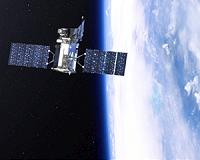 NASA Mission to Tote CU Instrument And Student Satellite
Boulder CO (SPX) Feb 23, 2011 A $28 million University of Colorado Boulder instrument developed to study changes in the Sun's brightness and its impact on Earth's climate is one of two primary payloads on NASA's Glory mission set to launch from Vandenberg Air Force Base in California on Feb. 23. Designed and built by a team from CU-Boulder's Laboratory for Atmospheric and Space Physics (LASP), the instrument called the ... read more |
|
|
| The content herein, unless otherwise known to be public domain, are Copyright 1995-2010 - SpaceDaily. AFP and UPI Wire Stories are copyright Agence France-Presse and United Press International. ESA Portal Reports are copyright European Space Agency. All NASA sourced material is public domain. Additional copyrights may apply in whole or part to other bona fide parties. Advertising does not imply endorsement,agreement or approval of any opinions, statements or information provided by SpaceDaily on any Web page published or hosted by SpaceDaily. Privacy Statement |


 del.icio.us
 Digg
Digg Reddit
 YahooMyWeb
 Google
 Facebook


