
 |
 |
 |
 |
 |
 |
 |
 |
 |

 |

Pasadena CA (JPL) Jan 27, 2011 Technicians from NASA's Jet Propulsion Laboratory in Pasadena, Calif., completed the installation of thermal blankets on NASA's Aquarius instrument last week, as the Aquarius/Satelite de Aplicaciones Cientificas (SAC-D) spacecraft continued functional performance tests at Brazil's National Institute for Space Research (Laboratorio de Integracao e Testes - Instituto Nacional de Pesquisas Espaciais, or LIT-INPE) in Sao Jose dos Campos. Activities are proceeding on schedule for shipment of the spacecraft to California's Vandenberg Air Force Base in late March for a launch in early June. Aquarius/SAC-D is an international mission involving NASA and Argentina's space agency, Comision Nacional de Actividades Espaciales. Aquarius, the primary instrument on the mission, was built jointly by JPL and NASA's Goddard Space Flight Center, Greenbelt, Md. It will provide monthly global maps of how the concentration of dissolved salt (known as salinity) varies on the ocean surface. Salinity is a key tracer for understanding the ocean's role in Earth's water cycle and understanding ocean circulation. By measuring ocean salinity from space, Aquarius will provide new insights into how the massive natural interplay of freshwater moving among the ocean, atmosphere and sea ice influences Earth's ocean circulation, weather and climate.
Share This Article With Planet Earth
Related Links Aquarius Space Technology News - Applications and Research

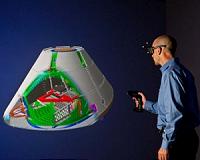 LockMart To Enhance Space Systems Development With Opening Of New Virtual Laboratory
Denver CO (SPX) Jan 25, 2011 Lockheed Martin plans to increase the affordability and efficiency of space system development with the opening of a new advanced technology and virtual simulation facility, known as the Collaborative Human Immersive Laboratory (CHIL). The CHIL, located at Lockheed Martin Space Systems Company headquarters in Littleton, Colo., integrates several virtual reality technologies enabling engine ... read more |
|
|
| The content herein, unless otherwise known to be public domain, are Copyright 1995-2010 - SpaceDaily. AFP and UPI Wire Stories are copyright Agence France-Presse and United Press International. ESA Portal Reports are copyright European Space Agency. All NASA sourced material is public domain. Additional copyrights may apply in whole or part to other bona fide parties. Advertising does not imply endorsement,agreement or approval of any opinions, statements or information provided by SpaceDaily on any Web page published or hosted by SpaceDaily. Privacy Statement |


 del.icio.us
 Digg
Digg Reddit
 YahooMyWeb
 Google
 Facebook


