
 |
 |
 |
 |
 |
 |
 |
 |
 |

 |

Moffett Field CA (SPX) Nov 24, 2010 The Organism/Organic Exposure to Orbital Stresses, or O/OREOS, nanosatellite managed by NASA's Ames Research Center, successfully launched at 5:25 p.m. PST on Friday, Nov. 19, 2010, from Alaska Aerospace Corporations Kodiak Launch Complex on Kodiak Island, Alaska. O/OREOS rode into orbit aboard a four-stage Air Force Minotaur IV rocket. Also aboard were the Air Force Research Laboratorys Space Test ProgramSat-2 (STPSat-2), NASA's Fast, Affordable, Science and Technology Satellite, or FASTSAT, payload bus which carried the NanoSail-Demonstration, NASA's first solar sail, as well as other satellites developed by universities and industry. The goal of the O/OREOS mission is to demonstrate the capability to conduct low-cost astrobiology science experiments on autonomous nanosatellites in space. Scientists will apply the knowledge they gain from O/OREOS to plan future experiments in the space environment to study how exposure to space changes organic molecules and biology. These experiments will help answer astrobiologys fundamental questions about the origin, evolution and distribution of life in the universe. "It was a spectacular sunset launch as O/OREOS got a piggyback ride into space on the STPSat-2 mission," said Bruce Yost, O/OREOS mission manager at Ames. "We're off to a great start, having made contact with O/OREOS with our ground station at Santa Clara University, received confirmation that the spacecraft successfully deployed and initiated the first experiment. "The amateur radio community also has been listening to O/OREOS and giving the operations team important information about the health and status of the spacecraft," Yost added. "The O/OREOS science team is excited to receive the first real-time measurements from samples onboard two science experiments," said Pascale Ehrenfreund, O/OREOS project scientist at the Space Policy Institute at George Washington University. "This will demonstrate that CubeSat technologies can be used for future missions to address fundamental astrobiology objectives." Approximately 19 minutes after launch, O/OREOS separated from the Minotaur IV rocket and entered low Earth orbit at an altitude of approximately 400 miles. About three hours after launch, amateur radio operator, Marco Bruno, in Torino, Italy received the first signals from O/OREOS. After a spacecraft checkout period, O/OREOS autonomously initiated the first of two experiments, which will last approximately six months and transmit data for as long as a year. The second experiment will start on Friday, Nov. 26, 2010. Now that O/OREOS is activated and has begun transmitting radio signals to ground control stations at Santa Clara University, the nanosatellite will send mission data to the NASA Mission Management and science teams at Ames for analysis. The STPSat-2 launch was the STP's 26th small launch vehicle mission. The Air Force Space Commands Space and Missile Systems Centers Space Development and Test Wing at Kirtland AFB, N.M., has overall management of the STPSat-2 mission. The Small Spacecraft Division at Ames manages the O/OREOS payload and mission operations with the professional support of staff and students from Santa Clara University, Santa Clara, Calif., in support of the Astrobiology Small Payloads program under the Planetary Science Division of the Science Mission Directorate at NASAs Headquarters in Washington.
Share This Article With Planet Earth
Related Links O/OREOS nanosatellite Life Beyond Earth Lands Beyond Beyond - extra solar planets - news and science

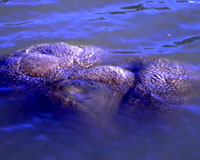 Poking An Alien Pod
Gloucester Point VA (SPX) Nov 10, 2010 Tracy Collier, an employee at Home Technologies in City Center at Oyster Point, Newport News, Virginia, was walking her employer's Westie around the Center's manmade lake when she saw a large, mysterious blob floating in the water. Co-worker Charlie Schmuck says "The lake is behind our office. Tracy was walking by the lake, saw the object, and asked everyone else to come out and take a loo ... read more |
|
|
| The content herein, unless otherwise known to be public domain, are Copyright 1995-2010 - SpaceDaily. AFP and UPI Wire Stories are copyright Agence France-Presse and United Press International. ESA Portal Reports are copyright European Space Agency. All NASA sourced material is public domain. Additional copyrights may apply in whole or part to other bona fide parties. Advertising does not imply endorsement,agreement or approval of any opinions, statements or information provided by SpaceDaily on any Web page published or hosted by SpaceDaily. Privacy Statement |


 del.icio.us
 Digg
Digg Reddit
 YahooMyWeb
 Google
 Facebook


