
 |
 |
 |
 |
 |
 |
 |
 |
 |

 |

Washington (UPI) Jul 15, 2010 The U.S. Navy awarded four contracts linked to the development of next generation jammer electronic warfare system pod worth a total of $168 million, The Navy Times reported. It said the contracts were given to ITT, Raytheon, Northrop Grumman and BAE Systems. Under the deals the companies will develop prototypes "of what a jammer capable of defeating 21st-century air defense radars should look like," The Navy Times reported. The new jammer is expected to replace the ALQ-99 tactical jamming system that protects U.S. aircraft from enemy missiles. It is understood that the U.S. Navy is planning to invest $4 billion in the development of a next generation jammer. ITT is said to be working with the Boeing Phantom Works unit in St. Louis for the production of the prototype. The ALQ-99 jamming system has been widely used, mounted on everything from the U.S. Air Force's now-retired EF-111 Raven to the U.S. Navy and Marine Corps' EA-6B Prowler and the Navy's EA-18G Growler electronic warfare jets, military experts say. The old system is capable of intercepting, automatically processing and jamming received radio frequency signals. It can also detect and locate the origin of those signals. Earlier this year, BAE and Cobham formed a strategic alliance that would work on the project, combining their expertise in electronic warfare, electronic attack, suppression of enemy air defenses and irregular warfare support to ground forces. Electronic warfare planes are widely used in modern-day combat operations. "The development and potential proliferation of new anti-aircraft radar missiles by nations such as China and Russia have prompted the Pentagon to look at a variety of ways to meet 21st-century anti-aircraft threats," The Navy Times said. What's more, with roadside bombs on the rise in Afghanistan, and the Taliban increasingly relying on cell phone and radios for communications, the U.S. forces deployed there are eager to update their aging jamming weapons. Proposed solutions being considered by the Pentagon range from developing "better jamming and countermeasure gear to developing stealthy, long-range unmanned aircraft that can hit targets that are heavily defended by modern air defense networks." The U.S. Air Force is also developing a new system for locating enemy satellite jammers. According to a U.S. Navy report issued last year, the U.S. military's airborne electronic attack weapons were considered useless against Russian S-400 integrated air defense systems currently being exported in the international market. "The aging ALQ-99 (tactical jamming system) lacks the capability to match today's complex integrated air defense, communication, data link and non-traditional radio frequency threats," the document warned, underscoring the need for new generation jammer systems.
Share This Article With Planet Earth
Related Links The latest in Military Technology for the 21st century at SpaceWar.com

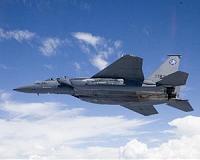 Boeing F-15 Silent Eagle Demonstrator Makes 1st Flight
St. Louis MO (SPX) Jul 15, 2010 The Boeing Company Silent Eagle flight demonstrator aircraft F-15E1 completed a successful first flight on July 8 from Lambert St. Louis International Airport. During the 80-minute flight, F-15E1 opened and closed its left-side Conformal Weapons Bay, which contained an AIM-120 Instrumented Test Vehicle (ITV) missile. The ITV was not launched. "The Silent Eagle demonstration flight va ... read more |
|
|
| The content herein, unless otherwise known to be public domain, are Copyright 1995-2010 - SpaceDaily. AFP and UPI Wire Stories are copyright Agence France-Presse and United Press International. ESA Portal Reports are copyright European Space Agency. All NASA sourced material is public domain. Additional copyrights may apply in whole or part to other bona fide parties. Advertising does not imply endorsement,agreement or approval of any opinions, statements or information provided by SpaceDaily on any Web page published or hosted by SpaceDaily. Privacy Statement |


 del.icio.us
 Digg
Digg Reddit
 YahooMyWeb
 Google
 Facebook


