
 |
 |
 |
 |
 |
 |
 |
 |
 |

 |

Pasadena CA (JPL) Sep 13, 2010 From farmers to government officials in charge of efficiently managing Earth's precious water and energy resources, people all over the world rely on accurate short-term climate forecasts on timescales ranging from a few weeks to a few years to make more informed decisions. But today's climate forecast systems have limited ability to operate on such timescales. That's because it's difficult to realistically represent the complex interactions between Earth's ocean, atmosphere and land surface in the climate models from which forecasts are developed. A new report by the National Academy of Sciences looks at the current state of these climate predictions and recommends strategies and best practices for improving them. Duane Waliser, chief Earth scientist at NASA's Jet Propulsion Laboratory, Pasadena, Calif., was on the 12-member panel that conducted the NOAA-requested study. Among the report's key recommendations: + Continue research to better understand and use information from key sources of climate predictability, and interactions between the ocean and atmosphere, atmosphere and land, as well as volcanic eruptions, greenhouse gases and land use changes. + Improve the basic building blocks of climate forecasts through better physical climate models, making more sustained physical observations, better incorporating observations into forecast systems, and increasing collaboration between forecast agencies and stakeholders in developing and implementing forecast strategies. + Adopt best practices such as working more closely with research communities, particularly universities; making data that feed into and come out of forecasts publicly available; minimizing subjective forecast components; and using forecast metrics that better convey to the public the probability aspects of forecasts. Waliser contributed his expertise in a phenomenon called the Madden-Julian Oscillation that exerts a powerful influence on short-term climate predictions. During this type of climate pattern, unusual variations of clouds, rainfall and large-scale atmospheric circulation move slowly eastward from the tropical Indian Ocean into the Pacific Ocean over the course of weeks, ebbing and flowing like waves in cycles lasting about 40 to 50 days. This climate pattern typically spans more than half the distance around Earth's equator. In the disturbed portion of the "wave," air rises, triggering showers and thunderstorms; in the sinking portion, air subsides, inhibiting clouds and rainfall. Madden-Julian Oscillation events can strongly influence long-term weather patterns and have widespread impacts around the globe. They can help trigger the beginning and end of the Asian and Indian monsoons and influence the development and evolution of El Nino, hurricanes and weather in Earth's mid-latitudes. Scientists want to incorporate information about the oscillation more accurately into the climate models that agencies around the world use to predict weather and climate. "Ten years ago, our ability to forecast Madden-Julian Oscillation events was very limited," said Waliser. "Today, numerous operational forecast centers around the world are recognizing the importance of forecasting the MJO and are beginning to provide useful forecast information about it. This information, in turn, can be used to make better forecasts of other weather and climate phenomena. "This new report highlights the key shortcomings and strategies needed to make more accurate climate forecasts-- not just of the Madden-Julian Oscillation, but of intraseasonal to interannual climate forecasts in general," he added. The full report, called "Assessment of Intraseasonal to Interannual Climate Prediction and Predictability," can be found here.
Share This Article With Planet Earth
Related Links National Academy of Sciences Climate Science News - Modeling, Mitigation Adaptation

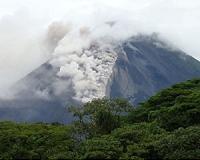 Better Ways To Engineer Earth's Climate To Prevent Dangerous Global Warming
Calgary, Canada (SPX) Sep 10, 2010 There may be better ways to engineer the planet's climate to prevent dangerous global warming than mimicking volcanoes, a University of Calgary climate scientist says in two new studies. "Releasing engineered nano-sized disks, or sulphuric acid in a condensable vapour above the Earth, are two novel approaches. These approaches offer advantages over simply putting sulphur dioxide gas into t ... read more |
|
|
| The content herein, unless otherwise known to be public domain, are Copyright 1995-2010 - SpaceDaily. AFP and UPI Wire Stories are copyright Agence France-Presse and United Press International. ESA Portal Reports are copyright European Space Agency. All NASA sourced material is public domain. Additional copyrights may apply in whole or part to other bona fide parties. Advertising does not imply endorsement,agreement or approval of any opinions, statements or information provided by SpaceDaily on any Web page published or hosted by SpaceDaily. Privacy Statement |


 del.icio.us
 Digg
Digg Reddit
 YahooMyWeb
 Google
 Facebook


