
 |
 |
 |
 |
 |
 |
 |
 |
 |

 |

College Park, Md. (UPI) Feb 8, 2011 The U.S. economy is growing only moderately and the job market remains sluggish, but stocks keep roaring ahead -- and they should. American companies are fundamentally undervalued and, unless upheavals in the Middle East or a European debt crisis derail global growth, the Dow Jones industrial average is headed for 13,000. Growth in the range of 3 percent to 3.5 percent in the United States and about 10 percent in China is great for U.S. equities. American companies may not add employees in large numbers but they can boost profits with only moderately expanding domestic demand thanks to breakneck productivity advances. And America's larger companies -- the S&P 500 -- earn about half their profits abroad, where they are poised to win big. Investors should rebalance toward U.S. equities. Don't abandon emerging markets but put new money into U.S. companies with global reach. American companies that bring together multiple technologies -- such as GE and IBM -- complex expertise -- such as in investment banking, construction and engineering and natural resources -- and more focused technology companies that are part of complex virtual networks -- like AMD and CISCO -- are poised to reassert U.S. competitiveness. Healed from the recession, those companies are prepared to exploit profit opportunities in a moderately growing U.S. economy and rapidly growing Asia. The structure of the U.S. private economy is changing -- not necessarily toward more services, as that is largely played out. Investors shouldn't be alarmed that housing isn't recovering -- the country has enough unsold homes to last several years. Industrials that don't use a lot of labor in production have abundant opportunities and supporting industries in software, logistics, etc. all look bright. That's why manufacturing, led by the auto sector, is stronger and finally adding some jobs. As long as China grows anywhere near 10 percent and the United States at least 3 percent, don't worry about U.S. equities being overvalued until the Dow hits 13,000 and maybe not even then depending on what happens during that journey. The Obama administration has made the U.S. economy irrelevant to large American businesses playing on the global stage. It lacks the nuanced understanding of business and globalization possessed by the administrations of Bill Clinton and George H.W. Bush. Eloquently pronouncing whichever nation succeeds in green industries will win the future doesn't make it true. Those activities are too small and will stay too small, in terms of shares of gross domestic product and employment, to base the prosperity of a $15 trillion economy. The United States isn't Switzerland but a continental economy -- niche industries and finance aren't enough. Abandoning main line industries for solar panels and fanciful, money-losing high-speed rail is folly. Clinton and the elder Bush didn't seek to micro manage industry with telephone book-sized instructions on how to value a home or make a bottle of ketchup. Instead, they set goals for sound practice. What the Obama administration fails to grasp is the BP mess in the Gulf of Mexico was caused by corrupt government regulators -- not the absence of impossible licensing requirements -- and the financial crisis was a failure of too much bad regulation. Sarbanes-Oxley, with its onerous and costly requirements, didn't keep the big banks from fooling Treasury that the Structured Investment Vehicles were no threat. U.S. President Barack Obama's regulatory reform task force is charged with ridding the country of irrelevant regulations, which are hard to find, and not reforming the overly burdensome and ineffective approach taken in recent years. With the administration tone deaf, big American companies are simply taking their show on the road and investing abroad. When Washington gets realistic about the costs and disadvantages its policies impose (healthcare, currency strategy toward China and mindless, as opposed to necessary and well-crafted regulation), U.S. companies will start creating jobs in America again. In the meantime, they will employ minimal labor here, go abroad and send profits home. (Peter Morici is a professor at the Smith School of Business, University of Maryland School, and former chief economist at the U.S. International Trade Commission.) (United Press International's "Outside View" commentaries are written by outside contributors who specialize in a variety of important issues. The views expressed do not necessarily reflect those of United Press International. In the interests of creating an open forum, original submissions are invited.)
Share This Article With Planet Earth
Related Links The Economy

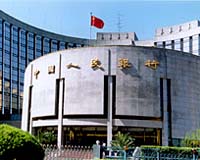 China raises interest rates to tame inflation
Beijing (AFP) Feb 8, 2011 China's central bank on Tuesday raised interest rates for the third time in four months, as authorities ramp up efforts to tame inflation amid fears it could trigger social unrest. The People's Bank of China said in a brief statement that it would raise the one-year deposit and lending rates by 25 basis points each, taking the rates to 3.0 percent and 6.06 percent respectively. In Octobe ... read more |
|
|
| The content herein, unless otherwise known to be public domain, are Copyright 1995-2010 - SpaceDaily. AFP and UPI Wire Stories are copyright Agence France-Presse and United Press International. ESA Portal Reports are copyright European Space Agency. All NASA sourced material is public domain. Additional copyrights may apply in whole or part to other bona fide parties. Advertising does not imply endorsement,agreement or approval of any opinions, statements or information provided by SpaceDaily on any Web page published or hosted by SpaceDaily. Privacy Statement |


 del.icio.us
 Digg
Digg Reddit
 YahooMyWeb
 Google
 Facebook


