
 |
 |
 |
 |
 |
 |
 |
 |
 |

 |

Washington (AFP) Dec 13, 2010 The best meteor shower of the year, a display of shooting stars known as the Geminids, is set to peak early Tuesday from about 0600 to 0800 GMT, NASA said Monday. People all over the world except Antarctica should be able to see at least some of the nighttime show, barring cloudy weather or excessive glare from urban light pollution. "Most of the world is positioned for a great view. Only if you live below 50 degrees (South) latitude are you unable to see the Geminids, ruling out Antarctica, unfortunately," said NASA expert Rhiannon Blaauw. What looks like a series of cascading lights is actually the ice and dust debris from an extinct comet known as Phaethon whose ice melted after a series of close shaves with the Sun. "Earth runs into a stream of debris from 3200 Phaethon every year in mid-December, causing meteors to fly from the constellation Gemini," NASA said in a statement. The annual Geminids meteor shower was first glimpsed late in the 19th century, but at that time "the shower was weak and attracted little attention. There was no hint that it would ever become a major display," NASA said. The meteor shower began on December 7 and is expected to continue for several more days, but the best viewing is set for the coming hours, beginning at 0000 GMT. The expected hourly rate of meteors is "in theory between 100 and 120, though due to light pollution you will probably see between 50 and 80 if you are in a dark location and your eyes have dark-adapted," said Blaauw. By overnight Tuesday to Wednesday in North America, the rate will have dipped to 30-40 an hour, she said. "The meteors will appear to come from the Gemini radiant, but looking directly at Gemini is not the best way to view them. If you just look straight up you should catch the most." For those out of sight range, NASA will also broadcast live footage online and a webchat with the head of NASA's Meteoroid Environment Office, Bill Cooke, from 0400 GMT to 1000 GMT Tuesday.
Share This Article With Planet Earth
Related Links Asteroid and Comet Impact Danger To Earth - News and Science

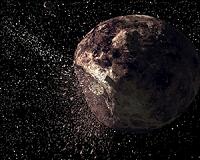 Geminid Meteor Shower Defies Explanation
Huntsville AL (SPX) Dec 09, 2010 The Geminid meteor shower, which peaks this year on Dec. 13th and 14th, is the most intense meteor shower of the year. It lasts for days, is rich in fireballs, and can be seen from almost any point on Earth. It's also NASA astronomer Bill Cooke's favorite meteor shower-but not for any of the reasons listed above. "The Geminids are my favorite," he explains, "because they defy explana ... read more |
|
|
| The content herein, unless otherwise known to be public domain, are Copyright 1995-2010 - SpaceDaily. AFP and UPI Wire Stories are copyright Agence France-Presse and United Press International. ESA Portal Reports are copyright European Space Agency. All NASA sourced material is public domain. Additional copyrights may apply in whole or part to other bona fide parties. Advertising does not imply endorsement,agreement or approval of any opinions, statements or information provided by SpaceDaily on any Web page published or hosted by SpaceDaily. Privacy Statement |


 del.icio.us
 Digg
Digg Reddit
 YahooMyWeb
 Google
 Facebook


