
 |
 |
 |
 |
 |
 |
 |
 |
 |

 |

Leeds, UK (SPX) Sep 29, 2010 A better way to pinpoint where volcanic eruptions are likely to occur has been produced by an international team of geophysicists. Scientists from the universities of Leeds, Purdue, Indiana and Addis Ababa, investigated volcanic activity occurring in the remote Afar desert of Northern Ethiopia between 2005 and 2009. By studying a rare sequence of 13 magmatic events - where hot molten rock was intruded into a crack between the African and Arabian plates - they found that the location of each intrusion was not random. They showed that they were linked because each event changed the amount of tension in the earth's crust. The findings, published in Nature Geoscience, will help scientists to more accurately predict where volcanic eruptions could strike and contribute to efforts to limit the damage they can cause. Lead author Dr Ian Hamling, who completed the analysis as part of his PhD in the School of Earth and Environment at the University of Leeds said: "It's been known for some time that a large earthquake has a role to play in triggering subsequent earthquakes, but until now, our knowledge of volcanic events has been based on isolated cases. We have demonstrated that volcanic eruptions can influence each other. This will help us predict where future volcanic eruptions are likely to happen." The team studied the region around a large volcanic dyke - a vertical crack which is created when Magma seeps from underground through rifts in the surface of the earth - which erupted in the Afar desert in September 2005. he Magma - hot molten rock - was injected along the dyke between depths of 2 and 9 km, and altered the tension of the earth. The team was able to watch the 12 smaller dykes that subsequently took place in the same region over a four year period. By monitoring levels of tension in the ground near where each dyke was intruded they found that subsequent eruptions were more likely in places where the tension increases. Dr Hamling said: "If you look at this year's eruptions at Ejafjallajokull in Iceland, by estimating the tension in the crust at other volcanoes nearby, you could estimate whether the likelihood of them eruption has increased or decreased. Knowing the state of stress in this way won't tell you when an eruption will happen, but it will give a better idea of where it is most likely to occur."
Share This Article With Planet Earth
Related Links University of Leeds Bringing Order To A World Of Disasters When the Earth Quakes A world of storm and tempest

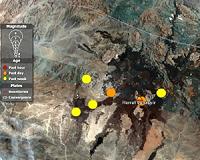 New study sheds light on Saudi volcano risk
Paris (AFP) Sept 26, 2010 A swarm of small earthquakes that struck western Saudi Arabia last year was the rumbling of a volcano, geologists reported on Sunday. More than 30,000 minor quakes occurred between April and June 2009 within an ancient solidified lava field called Harrat Lunayyir, damaging some buildings in the nearby town of Al Ays and prompting the authorities to evacuate 40,000 people from the region. ... read more |
|
|
| The content herein, unless otherwise known to be public domain, are Copyright 1995-2010 - SpaceDaily. AFP and UPI Wire Stories are copyright Agence France-Presse and United Press International. ESA Portal Reports are copyright European Space Agency. All NASA sourced material is public domain. Additional copyrights may apply in whole or part to other bona fide parties. Advertising does not imply endorsement,agreement or approval of any opinions, statements or information provided by SpaceDaily on any Web page published or hosted by SpaceDaily. Privacy Statement |


 del.icio.us
 Digg
Digg Reddit
 YahooMyWeb
 Google
 Facebook


