
 |
 |
 |
 |
 |
 |
 |
 |
 |

 |

Moscow (RIA Novosti) Apr 25, 2011 Russia will be ready to launch a light version of a Soyuz carrier rocket by 2012, commander of the Russian Space Forces Oleg Ostapenko said on Thursday. The Soyuz 2-1V launch vehicle, also known as Soyuz 1, is a two-stage medium class carrier rocket developed by the Progress design bureau. "We will be ready to carry out this launch at the end of 2011 or in the first quarter of 2012," Ostapenko said, adding that the rocket was ready for assembly at a Progress plant in Samara, the Volga Region. The new rocket is a modernized version of a Soyuz-2.1B, with the booster rockets removed, and the first stage equipped with a legendary NK-33 rocket engine, which was developed in the 1970s to carry Soviet cosmonauts to the moon onboard a giant N1 rocket. The second stage is the same as the Soyuz-2.1B. The rocket is capable of putting a payload of up to 2.85 tons (6,300 lb) to an orbit at an altitude of 200 kilometers. Launches could be carried out from upgraded launch pads at the Plesetsk Space Center in northwestern Russia and the Baikonur Space Center in Kazakhstan.
Share This Article With Planet Earth
Related Links - Rocket Science News at Space-Travel.Com

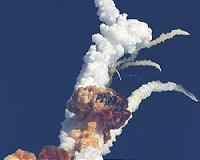 Weak Russian component downed Indian rocket Says Ex-ISRO chief
Chennai, India (IANS) Apr 25, 2011 The destruction of India's Geosynchronous Satellite Launch Vehicle (GSLV) in mid air in 2010 was due to an inherent weakness in a component in the Russian supplied cryogenic engine. "We did several simulation tests to find out why the connectors - the wires that carry command signals from the onboard computers at the top to the rocket's engines down below - snapped," former ISRO chief Madh ... read more |
|
|
| The content herein, unless otherwise known to be public domain, are Copyright 1995-2010 - SpaceDaily. AFP and UPI Wire Stories are copyright Agence France-Presse and United Press International. ESA Portal Reports are copyright European Space Agency. All NASA sourced material is public domain. Additional copyrights may apply in whole or part to other bona fide parties. Advertising does not imply endorsement,agreement or approval of any opinions, statements or information provided by SpaceDaily on any Web page published or hosted by SpaceDaily. Privacy Statement |


 del.icio.us
 Digg
Digg Reddit
 YahooMyWeb
 Google
 Facebook


