
 |
 |
 |
 |
 |
 |
 |
 |
 |

 |

New York NY (SPX) Jul 20, 2010 In the battle between insect predators and their prey, chemical signals called kairomones serve as an early-warning system. Pervasively emitted by the predators, the compounds are detected by their prey, and can even trigger adaptations, such a change in body size or armor, that help protect the prey. But as widespread as kairomones are in the insect world, their chemical identity has remained largely unknown. New research by Rockefeller University's Joel E. Cohen and colleagues at the University of Haifa in Israel has identified two compounds emitted by mosquito predators that make the mosquitoes less inclined to lay eggs in pools of water. The findings, published in the July issue of Ecology Letters, may provide new environmentally friendly tactics for repelling and controlling disease-carrying insects. Many animals use chemicals to communicate with each other. Pheromones, which influence social and reproductive behaviors within a particular species, are probably the best known and studied. Kairomones are produced by an individual of one species and received by an individual of a different species, with the receiving species often benefiting at the expense of the donor. Cohen and his Israeli colleagues focused on the interaction between two insect species found in temporary pools of the Mediterranean and the Middle East: larvae of the mosquito C. longiareolata and its predator, the backswimmer N. maculata. When the arriving female mosquitoes detect a chemical emitted by the backswimmer, they are less likely to lay eggs in that pool. To reproduce conditions of temporary pools in the field, the researchers used aged tap water with fish food added as a source of nutrients. Individual backswimmers were then placed in vials containing samples of the temporary pools, and air samples were collected from the headspace within the vials. The researchers used gas chromatography-mass spectrometry to analyze the chemicals emitted by the backswimmers. Cohen and his colleagues identified two chemicals, hydrocarbons called n-heneicosane and n-tricosane, which repelled egg-laying by mosquitoes at the concentrations of those compounds found in nature. Together, the two chemicals had an additive effect. Since the mosquitoes can detect the backswimmer's kairomones from above the water's surface, predator-released kairomones can reduce the mosquito's immediate risk of predation, says Cohen. But they also increase the female mosquito's chance of dying from other causes before she finds a pool safe for her to lay her eggs in. "That's why we think these chemicals could be a useful part of a strategy to control the population size of mosquitoes," says Cohen, who is the Abby Mauze Rockefeller Professor and head of the Laboratory of Populations. "We started this work from very basic curiosity about how food webs and predator-prey interactions work, but we now see unexpected practical applications. These newly identified compounds, and others that remain to be discovered, might be effective in controlling populations of disease-carrying insects. It's far too soon to say, but there's the possibility of an advance in the battle against infectious disease."
Share This Article With Planet Earth
Related Links Rockefeller University Darwin Today At TerraDaily.com

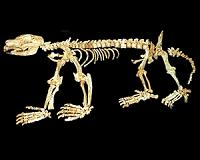 Remarkable Fossil Cave Shows How Ancient Marsupials Grew
Sydney, Australia (SPX) Jul 20, 2010 The discovery of a remarkable 15-million-year-old Australian fossil limestone cave packed with even older animal bones has revealed almost the entire life cycle of a large prehistoric marsupial, from suckling young in the pouch still cutting their milk teeth to elderly adults. In an unprecedented find, a team of University of New South Wales [Sydney Australia] researchers in has unearthed ... read more |
|
|
| The content herein, unless otherwise known to be public domain, are Copyright 1995-2010 - SpaceDaily. AFP and UPI Wire Stories are copyright Agence France-Presse and United Press International. ESA Portal Reports are copyright European Space Agency. All NASA sourced material is public domain. Additional copyrights may apply in whole or part to other bona fide parties. Advertising does not imply endorsement,agreement or approval of any opinions, statements or information provided by SpaceDaily on any Web page published or hosted by SpaceDaily. Privacy Statement |


 del.icio.us
 Digg
Digg Reddit
 YahooMyWeb
 Google
 Facebook


