
 |
 |
 |
 |
 |
 |
 |
 |
 |

 |

Miami (AFP) Aug 4, 2010 The forecast for the 2010 Atlantic hurricane season calls for nine more hurricanes by November, including five major ones with winds topping 178 kilometers (110 miles) per hour, a Colorado State University study said Wednesday. The predictions for a "much more active than average" June-November hurricane season includes 18 named tropical storms, three of which -- Alex, Bonnie and Colin -- have already hit the region between June and August. The predictions by CSU scientists Philip Klotzbach and William Gray confirm an earlier study that called for 10 hurricanes this season -- Alex became a hurricane with 150 kilometers (93 miles) per hour winds and struck Mexico's eastern shores on July 1. With 18 tropical storms predicted, the 2010 season would best the average 9.6 tropical storms and 5.9 hurricanes recorded this past century, the study said. The scientists attributed the unusually active season to the La Nina weather phenomenon that sees cooler Pacific Ocean temperatures and warmer ones in the Atlantic Ocean, giving rise to favorable hurricane-forming conditions. La Nina is a cyclical phenomenon opposite to El Nino, which brings unusually warm ocean temperatures to the equatorial Pacific, but cooler temperatures to the Caribbean and the Atlantic. "We estimate that 2010 will have... five major (Category 3-4-5) hurricanes (average is 2.3) and 13 major hurricane days (average is 5.0)," the scientists said. The CSU study put the chances of a major hurricane -- Category 3, 4 or 5 on the Saffir-Simpson scale -- striking US shores this season at 75 percent, compared to the last century's 52 percent average. The chances of a major hurricane entering the Gulf of Mexico, where a three-month BP oil spill was plugged Wednesday, were put at 49 percent, against a 30 percent average. And the chances of a major storm slamming islands in the Caribbean Sea were put at 64 percent, against a 42 percent average. The Saffir-Simpson Hurricane Wind Scale covers five categories ranging from 119 kilometers (74 miles) per hour to 249 kilometers (155 miles) per hour and above. A Category Three storm is defined as causing "devastating damage," while categories four and five can wreak "catastrophic damage."
Share This Article With Planet Earth
Related Links Bringing Order To A World Of Disasters When the Earth Quakes A world of storm and tempest

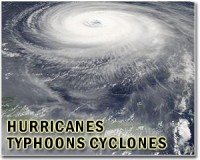 Tropical Storm Colin forms in Atlantic
Miami (AFP) Aug 3, 2010 A tropical storm formed in the Atlantic Tuesday, steaming toward the eastern seabord of the United States, US weather authorities said. Tropical Storm Colin's projected path remained well clear of the Gulf of Mexico where BP engineers were hoping to permanently plug the biggest oil spill in history. Colin was the third tropical storm of the Atlantic hurricane season, which runs from June ... read more |
|
|
| The content herein, unless otherwise known to be public domain, are Copyright 1995-2010 - SpaceDaily. AFP and UPI Wire Stories are copyright Agence France-Presse and United Press International. ESA Portal Reports are copyright European Space Agency. All NASA sourced material is public domain. Additional copyrights may apply in whole or part to other bona fide parties. Advertising does not imply endorsement,agreement or approval of any opinions, statements or information provided by SpaceDaily on any Web page published or hosted by SpaceDaily. Privacy Statement |


 del.icio.us
 Digg
Digg Reddit
 YahooMyWeb
 Google
 Facebook


