
 |
 |
 |
 |
 |
 |
 |
 |
 |

 |

San Antonio (UPI) Oct 2, 2010 The outer boundary of the solar system is more dynamic and complex than ever imagined, astronomers said. The Interstellar Boundary Explorer satellite, launched two years ago, is studying the heliosphere, the invisible bubble far beyond the planetary orbits where the solar wind meets the particles and radiation that fill interstellar space, researchers told the Los Angeles Times. The heliosphere, which protects the solar system from 90 percent of the cosmic rays outside it, is changing much faster than scientists expected, according to data published Thursday in the Journal of Geophysical Research. The sun emits a steady stream of particles traveling outward in all directions about 1 million mph. When they have traveled about 100 times farther than the distance between Earth and the sun the particles collide with the interstellar medium. They deflect most cosmic rays back into space and produce uncharged particles that stream back into the inner solar system. Over the last two decades, the solar wind has weakened and the heliosphere has shrunk, letting more cosmic radiation enter. Increased cosmic radiation could be very dangerous to future interstellar space travelers, said astronomer David McComas of the Southwest Research Institute in San Antonio.
Share This Article With Planet Earth
Related Links Solar Science News at SpaceDaily

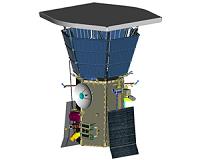 NRL's Wide-field Imager Selected For Solar Probe Plus Mission
Washington DC (SPX) Sep 30, 2010 NASA has chosen the Naval Research Laboratory's (NRL's) Wide-field Imager to be part of the Solar Probe Plus mission slated for launch no later than 2018. The Solar Probe Plus, a small car-sized spacecraft will plunge directly into the sun's atmosphere approximately four million miles from our star's surface. It will explore a region no other spacecraft ever has encountered in an effort to ... read more |
|
|
| The content herein, unless otherwise known to be public domain, are Copyright 1995-2010 - SpaceDaily. AFP and UPI Wire Stories are copyright Agence France-Presse and United Press International. ESA Portal Reports are copyright European Space Agency. All NASA sourced material is public domain. Additional copyrights may apply in whole or part to other bona fide parties. Advertising does not imply endorsement,agreement or approval of any opinions, statements or information provided by SpaceDaily on any Web page published or hosted by SpaceDaily. Privacy Statement |


 del.icio.us
 Digg
Digg Reddit
 YahooMyWeb
 Google
 Facebook


