
 |
 |
 |
 |
 |
 |
 |
 |
 |

 |

Washington DC (SPX) Oct 06, 2010 The U.S. Department of Agriculture (USDA) has released a new study by scientists and conservationists showing that non-federal rangelands in the Western United States are productive, but that non-native grasses and shrubs pose a potential threat to the rangelands' productivity. "American ranchers and farmers are at the front line of the effort to protect the health and productivity of our western rangelands," said Agriculture Secretary Tom Vilsack. "This new study not only provides valuable information about the current state of these lands, but also sets a baseline that will enable USDA to make our conservation efforts more effective and efficient in the future." The study, which was published in Frontiers in Ecology and the Environment, was the result of collaboration between two USDA agencies--the Agricultural Research Service (ARS) and the Natural Resources Conservation Service (NRCS)--and the U.S. Geological Survey. The study reveals that less than 25 percent of non-federal rangelands have significant land degradation, but that non-native plant species now occur on nearly 50 percent of all non-federal rangeland. While some of these species have significant benefits for soil conservation, others have negative effects. The study evaluated more than 10,000 field plots across western rangelands using National Resources Inventory (NRI) data. The NRI is a statistical survey designed to help gauge natural resource status, conditions and trends on U.S. non-federal land. For this study, the authors developed a new system for collecting NRI data to provide land managers with a baseline for making objective assessments. The system, developed by ARS, NRCS, USGS and the Bureau of Land Management, is designed to help land managers monitor western rangelands. It will also ensure the land remains productive by using scientific and local knowledge to establish reference conditions for different types of rangeland. Rangelands across the western United States support productive ecosystems, and hundreds of millions of dollars are invested each year in public and private funds to manage and conserve them. Because rangelands are highly diverse, their accurate assessments depend on understanding how different types of land vary in potential for supporting productive ecosystems while limiting runoff and erosion. "These findings will provide a new tool for addressing how to monitor the vast tracts that stretch across the western United States and ensure that they are well used and remain productive," said Edward B. Knipling, ARS administrator. "We have gained a great deal of knowledge about the health of U.S. rangelands with this study," said NRCS Chief Dave White. "NRCS can use this knowledge to improve our policies and technical skills to better serve landowners and taxpayers." The collected quantitative data can be used as a baseline to monitor rangeland health in future studies such as the USDA Conservation Effects Assessment Project (CEAP). CEAP is a long-term effort designed to determine the environmental effects of conservation practices on agricultural lands. CEAP also can be used to set a course for future conservation action.
Share This Article With Planet Earth
Related Links Frontiers in Ecology US Dept Of Agriculture - Research, Education And Economics Farming Today - Suppliers and Technology

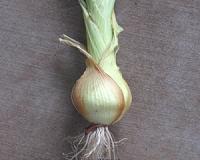 Agrilife Complete Two-Year Study On Short-Day Onions
Uvalde TX (SPX) Oct 06, 2010 Texas AgriLife Research scientists have recently completed a two-year study on the impact of deficit irrigation and plant density on the growth, yield and quality of short-day onions. Deficit irrigation is a strategy in which water is applied to a crop during its drought-senstitive stages of development and is either applied sparingly or not at all during other growth stages, particularly ... read more |
|
|
| The content herein, unless otherwise known to be public domain, are Copyright 1995-2010 - SpaceDaily. AFP and UPI Wire Stories are copyright Agence France-Presse and United Press International. ESA Portal Reports are copyright European Space Agency. All NASA sourced material is public domain. Additional copyrights may apply in whole or part to other bona fide parties. Advertising does not imply endorsement,agreement or approval of any opinions, statements or information provided by SpaceDaily on any Web page published or hosted by SpaceDaily. Privacy Statement |


 del.icio.us
 Digg
Digg Reddit
 YahooMyWeb
 Google
 Facebook


