
 |
 |
 |
 |
 |
 |
 |
 |
 |

 |

Copenhagen (AFP) Sept 5, 2010 The first launch attempt of a homemade rocket built by two Danes failed on Sunday because of a technical glitch, according to Danish media. Live footage of the launch off the Baltic island of Bornholm appeared to show brown smoke coming out of the rocket after the countdown. Experts interviewed by TV2 News said the likely cause was a failure of the ignition system. After an inspection, the builders of the rocket decided against a second launch and did not set a date for a new attempt. Peter Madsen and Kristian von Bengtsson have toiled for over two years to build the nine-metre (30 feet), 1.6-tonne prototype, which is named after the famous Danish astronaut Tycho Brahe. They intend "to show that with little financial means anyone can send a rocket into space, which is a privilege not just reserved for rich countries," said Madsen before the launch, which was delayed several times because of bad weather. The prototype, which contained a doll, cost a total of 50,000 euros (63,400 dollars) and was financed mostly by 2,000 individual sponsors and 20 companies. It had been hoped that the rocket would reach an altitude of between 10 and 30 kilometres (six to 19 miles). The duo hope to send a person into space within three or four years, which would make Denmark only the fourth nation to do so.
Share This Article With Planet Earth
Related Links Rocket Science News at Space-Travel.Com

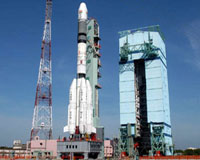 ISRO To Conduct Key Test For GSLV Mk III Rocket Next Week
Bangalore, India (PTI) Sep 03, 2010 After a failed test six months ago, Indian Space Research Organisation (ISRO) will be making a fresh attempt next week to conduct long-duration static test of a crucial liquid core stage for a new generation heavy rocket which is being developed. "The static test of crucial liquid core stage (L110) of GSLV Mk III launch vehicle (rocket) for 200 seconds is slated for 3 pm on September eight ... read more |
|
|
| The content herein, unless otherwise known to be public domain, are Copyright 1995-2010 - SpaceDaily. AFP and UPI Wire Stories are copyright Agence France-Presse and United Press International. ESA Portal Reports are copyright European Space Agency. All NASA sourced material is public domain. Additional copyrights may apply in whole or part to other bona fide parties. Advertising does not imply endorsement,agreement or approval of any opinions, statements or information provided by SpaceDaily on any Web page published or hosted by SpaceDaily. Privacy Statement |


 del.icio.us
 Digg
Digg Reddit
 YahooMyWeb
 Google
 Facebook


