. Energy News .


.
WATER WORLD
Tuna species urgently need protection: IUCN
by Staff Writers
Paris (AFP) July 7, 2011

French commissioner resists EU fish quota shake-up
Brussels (AFP) July 7, 2011 - An ambitious European Commission plan to replenish EU fish stocks within four years was under threat Thursday after a top EU official voiced deep reservations, EU sources said.

EU internal markets commissioner Michel Barnier, a former French agriculture minister, is objecting to "central parts" of a proposal to create a system for fishermen to trade quotas at the national level, an EU source said.

The idea has already upset two of Europe's biggest fishing states, France and Spain.

Barnier's spokeswoman said the commissioner wants to ensure that such a scheme will be "well controlled to avoid speculation," but she denied that he was blocking the plan.

"He wants to prevent the risk of an industrialisation and concentration of fishing at the expense of the human and economic balance of European coasts," said spokeswoman Chantal Hughes.

EU fishing commissioner Maria Damanaki is proposing to create national fishing quota trading markets that would allow fishermen to sell their allowable catch limits.

Her goal is to hack back the size of Europe's fishing fleet in order to have stocks delivering a maximum sustainable yield by 2015.

The reference organisation for the conservation status of Earth's animals and plants said for the first time Thursday that most species of tuna are urgently in need of protection.

Five of eight tuna species are now threatened or nearly threatened with extinction due to overfishing, according to the Red List of Threatened Species, compiled by the Swiss-based International Union for the Conservation of Nature.

The report is being released ahead of a July 11-15 meeting in La Jolla, California of the world's five regional fisheries management organisations (RFMOs), intergovernmental groups set up to insure that tuna fisheries remain sustainable.

Southern bluefin tuna stocks have already crashed with little hope of recovery, resulting in a "critically endangered" status, the IUCN reported.

Atlantic bluefin -- with populations in both the east and west fished to the edge of viability -- is now officially "endangered."

All bluefin tuna species "are susceptible to collapse under continued excessive fishing pressure," said Ken Carpenter, a professor at Old Dominion University in Norfolk, Virginia, and the head of the IUCN's Marine Biodiversity Unit.

Other tuna species under sharp pressure from high-tech factory ships that comb international waters in search of ever-dwindling stocks include bigeye, classified as vulnerable, along with yellowfin and albacore, both ranked as "near threatened."

"This is the first time that fishery scientists, ichthyologists (fish specialists) and conservationists have come together to jointly produce an assessment of the threat facing a commercially important group of fishes," said Bruce Collette, a senior scientist at the US National Marine Fisheries Service and head of the IUCN's Tuna and Billfish Specialist Group.

All told, the new peer-reviewed classification, based on a study published Thursday in the US journal Science, assessed 61 species of tunas, bonitas, mackerels and billfishes, a group that includes swordfish and marlins.

Among billfishes, blue and white marlins are deemed vulnerable, while striped marlin has been classified as near-threatened.

Up to 90 percent of many large, open-water fish have been depleted by industrial-scale fishing over the last half-century, and marine scientists warn that continued harvesting could lead to irreversible declines of some species.

Because many are at the top of the food chain, their disappearance could also disrupt delicately balanced ecosystems.

In the case of tuna species, "the most efficient way to avoid collapse is to shut down the fisheries until stocks are rebuilt to healthy levels," the researchers concluded.

"Scientific findings should not be discarded in order to maintain short-term profit," they added, a clear jab at RFMOs that have consistently ignored the advice of their own scientific committees in the past.

Five main species of tuna make up the annual worldwide catch of 4.0 to 4.5 million tonnes.

Destined mainly for supermarket shelves, skipjack (Katsuwonus pelamis) accounts for 60 percent of the total.

Yellowfin (Thunnus albacares) and bigeye (Thunnus obesus) comprise 24 and 10 percent of the global tuna market respectively.

Thunnus alalunga, better known as albacore, follows with five percent, while Atlantic Bluefin (Thunnus thynnus), highly prized in Japan for sashimi and sushi, is less than one percent.

Susan Lieberman, director of international policy for the Washington-based Pew Environment Group, welcomed the announcement.

"These results are yet another warning light that some species of tunas are dangerously over-exploited and others may be heading in that direction," she said.

"The study reinforces what marine conservationists have known for decades-that there are negative consequences to poor fisheries management. Around the world, tuna stocks are in serious decline, with too many boats chasing too few fish, along with widespread illegal fishing in several ocean areas. "


Related Links
Water News - Science, Technology and Politics

.
Get Our Free Newsletters Via Email
...
Buy Advertising Editorial Enquiries


Reports says world tuna stocks threatened
Gland, Switzerland (UPI) Jul 7, 2011 - The first-ever global species assessment of stocks of tuna and billfish is a warning that some species are dangerously over-exploited, conservationists say.

The assessment by the International Union for Conservation of Nature, headquartered in Glad, Switzerland, reinforces what marine conservationists have known for decades, that there are negative consequences to poor fisheries management, environmentalists said.

Susan Lieberman, director of International Policy for the Pew Environment Group, said her organization applauds the report.

"Pew welcomes this new and much needed global assessment of commercially and ecologically important species of tuna, swordfish and marlin," she said. "The analysis by the world's top scientific experts for these species evaluates the risk of extinction and highlights the combined impacts of a wide range of threats including overfishing, illegal fishing, habitat loss and pollution."

Tuna stocks are in serious decline around the world, with too many boats chasing too few fish and widespread illegal fishing in several ocean areas, the report said.

Larger tuna species such as bluefin and bigeye, which are longer-lived, slower to reproduce and economically more valuable, meet the IUCN criteria to be categorized as "threatened," it said.


. Comment on this article via your Facebook, Yahoo, AOL, Hotmail login.

Share this article via these popular social media networks
del.icio.usdel.icio.us DiggDigg RedditReddit GoogleGoogle


WATER WORLD
Bahamas bans shark fishing
Miami (AFP) July 5, 2011
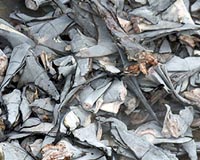
The Bahamas on Tuesday announced a ban on shark fishing, becoming the latest country to protect the ancient sea predator which is considered at risk due to demand for its fins in Chinese cuisine. The Atlantic Ocean archipelago said it was banning the commercial fishing of sharks in its 243,000 square miles (630,000 square kilometers) of water, along with the sale, import or export of shark p ... read more


WATER WORLD
Scientist instils new hope of detecting gravitational waves

NASA's Two Lunar-Bound Spacecraft, Vacuum-Packed

NASA probe shows Einstein theory was correct

WATER WORLD
Japan's Mitsui in quake-zone solar plan: report

Solis Partners Completes Rooftop Commercial Solar Installation in Bridgewater

High-Efficiency IDS Solar Inverter Technology Unveiled in North America

Race is on to site largest U.S. solar farm

WATER WORLD
Wind power numbers down in Britain

Wind farm inquiry balanced and reasonable

Power-One Inverters Chosen to Power WindTronics

Sheringham Shoal signs up For WindManager wind farm management system

WATER WORLD
Group: EU carbon permits should be cut

Australia PM warns polluters' days over

Japan's NTT DoCoMo plans green-energy cellphone towers

Poor frameworks block African energy plans

WATER WORLD
Mullen flies to China as US plans naval exercise

Manila, Beijing discuss disputed islands

China, Philippines agree to calm territorial row

Optics in LEDs for lighting

WATER WORLD
Microlensing Finds a Rocky Planet

A golden age of exoplanet discovery

CoRoT's new detections highlight diversity of exoplanets

Rage Against the Dying of the Light

WATER WORLD
Russia signs contract for two French warships

Iran's submarine's 'international mission'

Specialized seeds can really float your boat

Kuwait ends Bahrain naval mission: state media

WATER WORLD
Scientists uncover evidence of a wet Martian past in desert

NASA Research Offers New Prospect Of Water On Mars

New Animation Depicts Next Mars Rover in Action

Islands of Life - Part One


Memory Foam Mattress Review
Newsletters :: SpaceDaily Express :: SpaceWar Express :: TerraDaily Express :: Energy Daily
XML Feeds :: Space News :: Earth News :: War News :: Solar Energy News
.

The content herein, unless otherwise known to be public domain, are Copyright 1995-2011 - Space Media Network. AFP and UPI Wire Stories are copyright Agence France-Presse and United Press International. ESA Portal Reports are copyright European Space Agency. All NASA sourced material is public domain. Additional copyrights may apply in whole or part to other bona fide parties. Advertising does not imply endorsement,agreement or approval of any opinions, statements or information provided by Space Media Network on any Web page published or hosted by Space Media Network. Privacy Statement