
 |
 |
 |
 |
 |
 |
 |
 |
 |

 |

Tucson AZ (SPX) Aug 05, 2010 NASA and the European Space Agency, or ESA, have embarked on a joint program to explore Mars in the coming decades and have selected five science instruments - including one from the University of Arizona - for the first mission. The ExoMars Trace Gas Orbiter, scheduled to launch in 2016, is the first of three joint robotic missions to the Red Planet. It will study the chemical makeup of the Martian atmosphere with a 1,000-fold increase in sensitivity over previous Mars orbiters. The mission will focus on trace gases, including methane, which could be potentially geochemical or biological in origin and be indicators for the existence of life on Mars. It also will serve as an additional communications relay for Mars surface missions beginning in 2018. A stereo camera called the High Resolution Stereo Color Imager, or HiSCI, operated by the UA, will be a part of the orbiter. "The HiSCI camera will provide us with the very best color and stereo imaging of Mars we have ever seen, so we can find and study surface changes," said Alfred McEwen, a professor of planetary science at the UA who leads the HiSCI project. HiSCI will be operated by the same team at the UA's Lunar and Planetary Lab, or LPL, that has been acquiring images from Mars in stunning detail using the High Resolution Imaging Science Experiment, or HiRISE, camera that is orbiting Mars. HiSCI's color images will be much wider (more than 5 miles) than those of HiRISE (less than 1 mile), which will allow researchers to see much more of the Martian surface and changes that are occurring there. Having the three-dimensional and color information from HiSCI also will add to the value of existing high-resolution images from HiRISE, according to Shane Byrne, assistant professor at LPL and deputy principal investigator on the HiSCI project. HiRISE can take images at a finer resolution, but its color-imaging capabilities are limited and it requires two orbital passes, which can be months apart, to acquire a stereo image of a feature on Mars' surface. HiSCI will be able to take a stereo pair of images in the same pass, which eliminates unwanted variation, such as differences in sun angle at the time each image is shot. In addition to using HiSCI to image previously unknown features, the UA team plans to take a closer look at features already imaged with the HiRISE camera and other Mars orbital experiments and to search for new candidate landing sites to follow up on new discoveries. "Over the last four years, HiRISE has photographed only 1 percent of the Martian surface, but it already has discovered many unexpected features and phenomena," Byrne said. "It's exciting to think of all the great new discoveries we'll make with HiSCI's greater color and stereo capabilities." NASA and ESA invited scientists worldwide to propose the spacecraft's instruments. The five selected were from 19 proposals submitted in January. Both agencies evaluated the submissions and chose those with the best science value and lowest risk. The instrument selection begins the first phase of the new NASA-ESA alliance for future ventures to Mars. The other instruments selected for the mission and their respective principal investigators are: Mars Atmosphere Trace Molecule Occultation Spectrometer - a spectrometer designed to detect very low concentrations of the molecular components of the Martian atmosphere; Paul Wennberg, California Institute of Technology in Pasadena, Calif. High Resolution Solar Occultation and Nadir Spectrometer - a spectrometer designed to detect traces of the components of the Martian atmosphere and to map where they are on the surface; Ann C. Vandaele of the Belgian Institute for Space Aeronomy in Brussels, Belgium. ExoMars Climate Sounder - an infrared radiometer that provides daily global data on dust, water vapor and other materials to provide the context for data analysis from the spectrometers; John Schofield of NASA's Jet Propulsion Laboratory in Pasadena, Calif. Mars Atmospheric Global Imaging Experiment - a wide-angle, multi-spectral camera to provide global images of Mars in support of the other instruments; Bruce Cantor of Malin Space Science Systems in San Diego, Calif. The science teams on all the instruments have broad international participation from Europe and the U.S., with important hardware contributions from Canada and Switzerland. "To fully explore Mars, we want to marshal all the talents we can on Earth," said David Southwood, ESA director for science and robotic exploration. "Now NASA and ESA are combining forces for the joint ExoMars Trace Gas Orbiter mission. Mapping methane allows us to investigate further that most important of questions: Is Mars a living planet, and if not, can or will it become so in the future?" NASA and ESA share a common interest in conducting robotic missions to the Red Planet for scientific purposes and to prepare for possible human visits. After a series of extensive discussions, the science heads of both agencies agreed on a plan of cooperation during a July 2009 meeting in Plymouth, England, later confirmed by ESA director general Jean-Jacques Dordain and NASA administrator Charles Bolden in a statement of intent that was signed in November. The plan consists of two Mars cooperative missions in 2016 and 2018 and a later joint sample return mission. The 2016 mission features the European-built ExoMars Trace Gas Orbiter, a European-built small lander demonstrator, a primarily-U.S. international science payload, and NASA-provided launch vehicle and communications components. ESA member states will provide additional instrument support. The 2018 mission consists of a European rover with a drilling capability, a NASA rover capable of caching selected samples for potential future return to Earth, a NASA landing system and a NASA launch vehicle. These activities are designed to serve as the foundation of a cooperative program to increase science returns and move the agencies toward a joint Mars sample return mission in the 2020s.
Share This Article With Planet Earth
Related Links University of Arizona Mars News and Information at MarsDaily.com Lunar Dreams and more

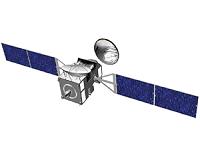 NASA And ESA's First Joint Mission To Mars Selects Instruments
Pasadena CA (SPX) Aug 03, 2010 NASA and the European Space Agency (ESA) have embarked on a joint program to explore Mars in the coming decades and selected the five science instruments for the first mission. The principal investigator for one of the instruments, and the management for NASA's roles in the mission, are based at NASA's Jet Propulsion Laboratory, Pasadena, Calif. The ExoMars Trace Gas Orbiter, schedul ... read more |
|
|
| The content herein, unless otherwise known to be public domain, are Copyright 1995-2010 - SpaceDaily. AFP and UPI Wire Stories are copyright Agence France-Presse and United Press International. ESA Portal Reports are copyright European Space Agency. All NASA sourced material is public domain. Additional copyrights may apply in whole or part to other bona fide parties. Advertising does not imply endorsement,agreement or approval of any opinions, statements or information provided by SpaceDaily on any Web page published or hosted by SpaceDaily. Privacy Statement |


 del.icio.us
 Digg
Digg Reddit
 YahooMyWeb
 Google
 Facebook


