
 |
 |
 |
 |
 |
 |
 |
 |
 |

 |
US Navy Flight Tests New Raytheon SM-2 Target Detecting Device
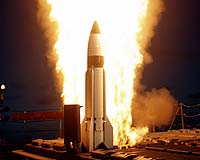
Point Mugu CA (SPX) Jan 23, 2009 The U.S. Navy flight tested Raytheon's new Standard Missile-2 target detecting device. The SM-2 Block IIIB flight was the lowest altitude intercept to date using the new device, which enhances the SM-2's ability to detect and destroy threats. The missile was fired from USS STERETT (DDG-104) during combined combat system ship qualification trials. The test flights included additional SM-2 Block IIIA, SM-2 Block IIIB and SM-2 Block III missiles. The missiles engaged multiple targets under stressing conditions representing a variety of threat scenarios. "These tests demonstrate the reliability and accuracy of SM-2 as it continues to evolve," said Ron Shields, Raytheon Missile Systems Standard Missile program director. "The SM-2's ability to successfully employ this new target detecting device against challenging targets enhances the missile's usefulness to the warfighter." SM-2 Block IIIB is an anti-air warfare weapon system deployed by the U.S. Navy for long-range ship self defense and has a range of 90 nautical miles (167 km or 103 statute miles). The SM-2 Block IIIB missile adds an infrared seeker to its proven guidance section to defeat target countermeasures and provide enhanced performance against supersonic, high-G maneuvering sea skimming air-to-surface missiles. "This test once again proves why SM-2 is the U.S. Navy's front line self-defense weapon," said Kirk Johnson, U.S. Navy's Standard Missile program manager. "SM-2 provides the warfighter with the most modern solution against air-to-surface missiles, and it continues to evolve to meet our future needs." Share This Article With Planet Earth
Related Links - The latest in Military Technology for the 21st century at SpaceWar.com
 US coast guard goes digital
 Miami (AFP) Jan 22, 2009
Starting next month the US coast guard only will receive distress calls in digital format, the guard said in a statement Thursday. |
|
|

| The content herein, unless otherwise known to be public domain, are Copyright 1995-2007 - SpaceDaily.AFP and UPI Wire Stories are copyright Agence France-Presse and United Press International. ESA Portal Reports are copyright European Space Agency. All NASA sourced material is public domain. Additional copyrights may apply in whole or part to other bona fide parties. Advertising does not imply endorsement,agreement or approval of any opinions, statements or information provided by SpaceDaily on any Web page published or hosted by SpaceDaily. Privacy Statement |
 del.icio.us
 Digg
Digg Reddit
 YahooMyWeb
 Google
 Facebook