
 |
 |
 |
 |
 |
 |
 |
 |
 |

 |

Richmond, Canada (SPX) Nov 03, 2010 Corvus Energy is transforming the marine, transportation and energy industries with its release of an advanced lithium-ion battery technology that is able to store and distribute energy in megawatt sizes and has the capacity to output sustained power comparable to diesel engines in hybrid and full-electric vessels and vehicles. Current hybrid designs in the marine industry, being installed with Corvus batteries, will cut CO2 emissions and fuel consumption in heavy-polluting workboats by 75 percent. Corvus' proprietary lithium-ion battery packs have four times the power and energy storage of lead-acid batteries in half the volume and a quarter of the weight. Each battery pack delivers at least 22 percent more power and energy density than the most powerful Lithium-ion phosphate batteries used in electric vehicles and consumer products. The battery design is built around a new nickel-manganese-cobalt (NMC)-based Dow Kokam cell and patent-pending Corvus battery management system that exponentially enhances battery efficiency and performance with energy storage capacity from 6.2kWh to unlimited sizes. "We've made the theoretical possible," said Brent Perry, Corvus' chief executive officer. "This is the first time that truly effective portable and remote energy storage has been created for the marine, transportation and heavy-power industries. Our battery's cells are 99 percent efficient, a full 10 to 30 percent better than any other brand. It's available today and it's revolutionizing the energy sector." Company founders George Roddan, a ground-breaking naval architect, and Neil Simmonds, who holds more than 70 patents in battery management systems, joined forces with Perry in 2009 to create a battery pack that could provide diesel-engine-scale power and solve the marine and transportation industries' energy problems. Corvus invested more than $5 million to create a safe, modular battery pack tough enough to withstand the world's harshest ocean and port environments, as well as fully function between -4 degrees and 140 degrees Fahrenheit. In addition, each pack has an average life of twenty years. Lead-acid batteries last just seven years. "Corvus is enabling engineers, who design wind farms and grid systems to cruise ships and tug boats, to rethink how they can store energy and use power," said Perry. "It changes the entire landscape. Energy can be stored in regions that previously didn't have consistent power and ports can clean up their act with workboats and equipment that no longer require diesel engines."
Marine Applications Tugboats can draw extra energy from the battery packs during full-power surges, fully rely on the pack during idle periods and power critical navigational instruments for hours. The packs are the most efficient in the industry and recharge in 30 minutes.
Transportation Applications Auxiliary power units with Corvus batteries allow trucks to reduce fuel consumption by 2,000 gallons annually and eliminate on a per vehicle basis: 19 metric tons of carbon dioxide, 705 pounds of nitrogen oxide, 143 pounds of reactive organic gas and 9.5 pounds of particulate matter.
Manufacturing Applications The plant will process Heritage Acre Foods' all-natural pork, capture and reprocess the blood and other waste, rather than dumping it, and will have a bio-diesel plant to make its own diesel fuel to run its generators. Kremer selected Corvus Energy's revolutionary 400-500 kWh battery pack to store energy captured by wind and solar generators and disperse it as needed.
Share This Article With Planet Earth
Related Links Corvus Energy Powering The World in the 21st Century at Energy-Daily.com

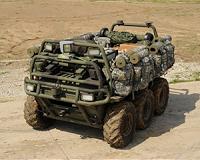 SMSS Autonomous Vehicle To Demo Portable Battery Charging For Soldiers
Dallas TX (SPX) Oct 26, 2010 Lockheed Martin's Squad Mission Support System (SMSS) autonomous vehicle will demonstrate its rugged maneuverability while meeting Soldiers' needs to recharge batteries in Portable Power Excursion (PPE) tests next month at Fort Riley, KS. The Portable Power Excursion test is part of the larger Nett Warrior program, which will use the PPE tests to collect data and form a strategy to help al ... read more |
|
|
| The content herein, unless otherwise known to be public domain, are Copyright 1995-2010 - SpaceDaily. AFP and UPI Wire Stories are copyright Agence France-Presse and United Press International. ESA Portal Reports are copyright European Space Agency. All NASA sourced material is public domain. Additional copyrights may apply in whole or part to other bona fide parties. Advertising does not imply endorsement,agreement or approval of any opinions, statements or information provided by SpaceDaily on any Web page published or hosted by SpaceDaily. Privacy Statement |


 del.icio.us
 Digg
Digg Reddit
 YahooMyWeb
 Google
 Facebook


