
 |
 |
 |
 |
 |
 |
 |
 |
 |

 |

Luxembourg (UPI) Dec 29, 2010 A "zombie satellite" adrift in orbit has come back to life, resetting itself after an unexplained breakdown in space this year, its European controllers say. When the flight center of owner Intelsat lost the ability to control the Galaxy 15 communications satellite in April, its broadcast package remained in operation, transmitting signals, posing a risk of interfering with the signals of neighboring satellites, SPACE.com reported. In the succeeding months Intelsat worked with operators of other broadcast satellites to ensure that their communications services, including television broadcasts, were not affected whenever Galaxy 15 drifted by. Finally, on Dec. 23, Galaxy 15's battery, which relied on solar panels pointed at the sun to generate power, completely drained, Intelsat officials said. Once that happened, the satellite reset itself as designed and began accepting commands from Intelsat's control center. "We have placed Galaxy 15 in safe mode, and at this time, we are pleased to report it no longer poses any threat of satellite interference to either neighboring satellites or customer services," Intelsat officials said. With Galaxy 15 now accepting commands from Earth, there is a possibility it could be made fully functional again, they said.
Share This Article With Planet Earth
Related Links Space Technology News - Applications and Research

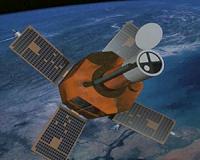 TRACE Spacecraft's New Slewing Procedure
Greenbelt MD (SPX) Dec 28, 2010 The fastest path between Point A and Point B is a straight line. Not so fast, says a team of scientists and engineers who recently disproved this commonly accepted notion using a NASA satellite that had not moved more than 15 degrees during its 12-year mission studying the Sun. In what may seem counterintuitive even to engineers, a team from the Naval Postgraduate School (NPS) in Monterey, ... read more |
|
|
| The content herein, unless otherwise known to be public domain, are Copyright 1995-2010 - SpaceDaily. AFP and UPI Wire Stories are copyright Agence France-Presse and United Press International. ESA Portal Reports are copyright European Space Agency. All NASA sourced material is public domain. Additional copyrights may apply in whole or part to other bona fide parties. Advertising does not imply endorsement,agreement or approval of any opinions, statements or information provided by SpaceDaily on any Web page published or hosted by SpaceDaily. Privacy Statement |


 del.icio.us
 Digg
Digg Reddit
 YahooMyWeb
 Google
 Facebook


